October 10, 2017 — Accuray Inc. announced that data from a prospective study of 230 men with low-risk prostate cancer showed 98.4 percent had local disease control 10 years after receiving stereotactic body radiation therapy (SBRT) administered with the CyberKnife System, and toxicity was mild. The study titled, “Stereotactic Body Radiotherapy for Low-Risk Prostate Cancer: A Ten Year Analysis,” was published online in the Sept. 9, 2017 issue of Cureus.
“This is a groundbreaking study — the first to report on the efficacy and toxicity of SBRT in the treatment of low-risk prostate cancer following 10 years of treatment. All patients participating in the study were treated with the CyberKnife System, which delivers extremely precise radiation treatments using unique, real-time image guidance and automatic motion correction. The study outcomes were excellent both in terms ofdisease control and tolerability, and were superior to long-term conventional intensity-modulated radiation therapy, based on results from other studies,” said Alan Katz, M.D., Flushing Radiation Oncology.
Study participants completed their entire treatment in just five daily sessions, compared to conventional radiation therapy which typically takes 30 to 40 sessions. Additional 10-year outcomes showed:
- The disease free survival (DFS) rate was 93.7 percent, indicating there were no signs or symptoms of the cancer during the evaluation period;
- The median prostate specific antigen (PSA) value was 0.1 ng/ml. A low PSA value is associated with a reduced risk of cancer recurrence or metastases; and
- Patient-reported bowel and urinary function scores showed initial declines, which recovered to baseline where they remained throughout the remainder of the study period.
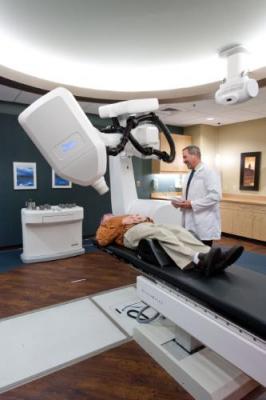
The prostate gland can move unpredictably throughout the course of treatment, making the ability to track, detect and correct for motion critically important. Throughout the course of treatment, the CyberKnife System continually collects images to determine exactly where the tumor is, ensuring that clinicians deliver radiation exactly where they want it. The system detects the tumor motion and automatically adjusts the radiation beam in real time to match the motion of the tumor, giving clinicians confidence to apply smaller treatment margins and enabling higher doses and fewer treatments.
For more information: www.accuray.com

 October 19, 2026