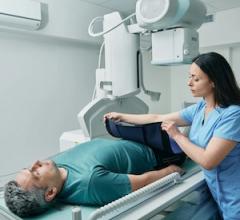
August 19, 2013 — Children’s Hospital at Erlanger (Chattanooga, Tenn.) recently implemented a Carestream DRX-Evolution with Carestream’s long-length imaging software to optimize image quality for all types of X-ray images including long-length exams for pediatric surgeons and other specialists. In addition to trauma and intensive care services, the hospital offers pediatric specialists in all major areas of care including orthopaedics, cardiology, endocrinology, gastroenterology, neurology and oncology.
“We equipped our DRX-Evolution with high-resolution cesium iodide detectors to enhance image quality and help reduce dose. Our specialists immediately commented on the additional level of detail they are able in see in the X-ray images,” said Byron Stutz, Children’s Hospital at Erlanger’s chief radiologic technologist.
The radiology department conducts hundreds of long-length images each month for joint surveys and for diagnosing and treating conditions including scoliosis, hip dysplasia and other abnormalities. “We see congenital conditions as well as those caused by injuries or obesity,” said Stutz. “Carestream’s long-length imaging system stitches the captured images with a high degree of resolution and geometric accuracy. Our surgeons and orthopaedic specialists are pleased with the quality of these images, which is an improvement over long-length CR [computed radiography] images.”
Carestream software adjusts the exposure discrepancies between images and compensates for the latitude differences, therefore providing presentation that is individually optimized for each image and its corresponding anatomical region. The image-processing algorithm then stitches the individually optimized images together to create a smooth and seamless composite image for diagnosis.
The Carestream DRX-Evolution DR Room is a versatile digital radiography system with configurable, modular components that combine to fit the space, workflow and budget requirements of each healthcare facility. This system can perform a wide variety of general radiographic exams with convenience, productivity and patient comfort. Optional cesium iodide DRX-1C detectors offer high DQE (detective quantum efficiency) and can lower X-ray exposure when compared to CR cassettes or gadolinium scintillator detectors.
For more information: www.carestream.com

 October 07, 2026