Photo courtesy of iStock
December 26, 2014 – Cancer therapy can be much more effective using a new way to customize nuclear medicine treatment, researchers say in the December 2014 issue of The Journal of Nuclear Medicine. The process could also be useful for other diseases that could benefit from targeted radiation.
Targeted therapy with radiopharmaceuticals has great potential for the treatment of cancer, especially for cancer cells that have migrated from primary tumors to lymph nodes and secondary organs such as bone marrow. These disseminated tumor cells can be difficult to treat with a single targeting agent because there are dramatic differences in the number of targetable receptors on each cell.
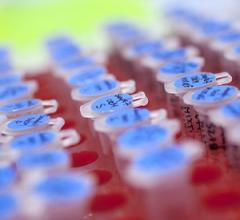
In the study, breast cancer cells were treated with different concentrations of a cocktail of four fluorochrome-conjugated monoclonal antibodies. The amount of each antibody bound to each cell was determined using flow cytometry. Formulas were developed to “arm” the antibodies with the desired radionuclide and activity, calculate the absorbed dose to each cell, and perform a simulation of the surviving fraction of cells after exposure to cocktails of different antibody combinations. Simulations were performed for three alpha-particle emitters.
“Our approach moves radiation treatment planning for cancer therapy from the tumor level to the molecular and cellular level, with nuclear medicine serving as the treatment engine,” stated Roger Howell, Ph.D., lead researcher. “The concepts are not restricted to cancer therapy but can be applied more widely to other diseases that may benefit from a targeted approach with cocktails of radiopharmaceuticals. The approach can also be extended to cocktails consisting of radiopharmaceuticals and non-radioactive agents.”
The effect of the radiopharmaceutical cocktails was compared to that of single antibodies. In certain activities, cocktails outperformed single antibodies by a factor of up to 244. These findings suggest that targeted alpha therapy can be improved with customized radiolabeled antibody cocktails. Depending on the antibody combination and specific activity of the radiolabeled antibodies, cocktails can provide a substantial advantage in tumor cell killing. The methodology used in this analysis provides a foundation for pretreatment prediction of tumor cell survival in the context of personalized cancer therapy.
For more information: jnm.snmjournals.org

 October 09, 2026