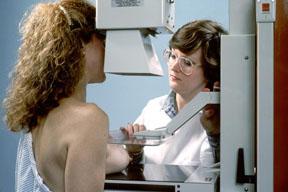
January 5, 2010 - Breast cancer screening should begin at age 40 and earlier in high-risk patients, according to the new recommendations from the Society of Breast Imaging (SBI) and the American College of Radiology (ACR) on breast cancer screening, published in the January issue of the Journal of the American College of Radiology (JACR). The recommendations also suggest appropriate utilization of medical imaging modalities such as mammography, magnetic resonance imaging (MRI), and ultrasound for breast cancer screening. “The significant decrease in breast cancer mortality, which amounts to nearly 30 percent since 1990, is a major medical success and is due largely to earlier detection of breast cancer through mammography screening,” said Carol H. Lee, MD. “For women with the highest risk of developing breast cancer, screening technologies in addition to mammography have been adopted,” said Dr. Lee. The new recommendations released by the SBI and ACR include recommendations for imaging screening for breast cancer by imaging technique (mammography, MRI, and ultrasound) and by risk factor. The recommendations state that the average patient should begin annual breast cancer screening at age 40. High-risk patients should begin by age 30, but not before 25. “Evidence to support the recommendation for regular periodic screening mammography comes from the results of several randomized trials (RCTs) conducted in Europe and North America that included a total of nearly 500,000 women. Overall, based on a meta-analysis of the RCTs, there was a 26 percent reduction in mortality,” said Dr. Lee. “It should be remembered that mammography is the only imaging modality that has been proven to decrease mortality from breast cancer. However major efforts continue to build on this success by developing additional methods to screen for early breast cancer,” she said. Dr. Lee stressed that the SBI and ACR "wish to remind women and their physicians that in those instances in which there is a concern that risk of developing cancer is considerably elevated from that of the general population, consultation with appropriate experts in breast cancer genetics and/or high risk management is desirable.” For more information: www.jacr.org

 October 15, 2026