

Greg Freiherr has reported on developments in radiology since 1983. He runs the consulting service, The Freiherr Group.
Blog | October 03, 2014
Nuclear Medicine is the New Personalized Medicine
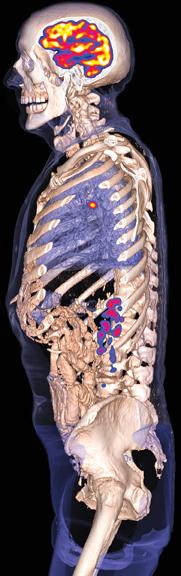
Photo courtesy of Siemens Healthcare
Remember the race to map the human genome, when the widest international collaboration in history went up against the efforts of a private corporation, Celera? The race ended in a tie in 2001 with near simultaneous publications in Nature (public effort) and Science (Celera) as both public and private sectors served up analyses of about 80 percent of the genome. Unfortunately, the outcome of this Herculean effort did not come close to meeting expectations.
Mapping the human genome was supposed to unlock the secrets of disease and make possible truly personalized medicine. It was to have explained why some people fall ill while others do not — and how those who become ill could be best treated. It just didn’t work out that way.
Now more than a decade later, personalized medicine, based on genetic information, is decades more away. Even just understanding the genome still eludes the grasp of researchers.
What did come from those early days of hyperbole was recognition of how badly the public wants personalized medicine. Patients and providers alike are fed up with medicine as an art. They want it to be a science. That is what personalized medicine was supposed to be. And it is now what nuclear medicine aspires to be.
Once hampered by the negative connotations of its first name, nuclear medicine reinvented itself shortly after the turn of the century, rebranding itself as “molecular imaging.” Measurements of radiotracer uptake complement the visualization of metabolic activity, particularly in positron emission tomography/computed tomography (PET/CT). This hybrid is routinely leveraged to calculate the dose of therapeutic radionuclides and to gauge the effect of therapies on malignant tumors.
If there’s a fly in the ointment, it’s that the promoters of molecular imaging as the harbinger of personalized medicine may be promising too much. We hear about the commitment of companies in this industry to personalized medicine and the latest gizmo or upgraded gadget that makes it real. To their credit, however, they are careful to describe successes within narrow confines, as in the case of peptide receptor radionuclide therapy (PRRT).
PRRT is on the front lines of this new personalized medicine. Its somatostatin analogs, which selectively bind to the cellular receptors in neuroendocrine tumors, carry a gallium radionuclide that simultaneously emits radiation that kills tumors and makes the analogs visible and quantifiable with PET/CT. The end effect of successful and measurable treatment is decreased tumor size, reduced symptoms and even a halt in tumor progression in many patients with neuroendocrine tumors.
Similar results have been achieved in patients with esophageal and lung cancers, as well as diffuse large B-cell lymphoma, using radiotherapeutic compounds complemented by FDG imaging and quantitation with PET/CT. The potential to do the same with even some advanced forms of single-proton emission computed tomography (SPECT)/CT has also been demonstrated.
Anatomically based tools, such as magnetic resonance imaging (MRI) and CT, pale by comparison. Whereas these modalities record the dimensions of a tumor, those dimensions may be inflamed by the cellular debris that comes from successful chemo- or radiotherapy. Not so with molecular imaging, which demonstrates visually and quantitatively, at least in some cases, the presence of viable tumor. Trends in uptake values graphically show changes in tumor metabolism, giving providers an indication of whether and how well therapies are doing.
To be sure, molecular medicine is not what personalized medicine was supposed to be. But it is a step in the right direction. Perhaps most importantly, it is a step that can — and is — being taken.
That it does not spring from knowledge gained by mapping the human genome, I could care less.
Related Content

News | FDA
Oct.7, 2026 – MRI2CT Inc. has received FDA 510(k) clearance for NextMR, its AI powered imaging platform, for generating ...
 October 07, 2026

News | Information Technology
October 6, 2026 – Clearsense has introduced a cloud-based medical image archive designed to reduce the cost of ...
October 07, 2026 
News | PET-MRI
Sept. 29, 2026 —Yale New Haven Hospital has installed a state-of-the-art positron emission tomography/magnetic resonance ...
October 05, 2026 
News | Radiology Imaging
Aug. 13, 2026 — Epic's new Care Everywhere Diagnostic Image Exchange allows health systems using Epic to share ...
August 21, 2026 
News | Cardiac Imaging
Aug. 20, 2026 – The novel, radiopaque, polymer-based embolic coil from Embolization, Inc. has now surpassed 125 implants ...
August 20, 2026 
News | Breast Imaging
Aug. 13, 2026 – Perimeter Medical Imaging AI recently announced that Intermountain Health, the largest nonprofit health ...
August 14, 2026 
News | Lung Imaging
Aug. 11, 2026 — Noah Medical has launched the Galaxy II software, the next evolution of its robotic-assisted ...
August 10, 2026 
News | Radiology Business
Aug. 4, 2026 — Canon Medical Systems USA (CMSU) has appointed Tsuneo "Neo" Imai as president and chief executive officer ...
August 10, 2026 
News | Radiology Imaging
Aug. 4, 2026 — A new study from the Harvey L. Neiman Health Policy Institute found that the time between an imaging scan ...
August 06, 2026 
News | Contrast Agents
Aug. 5, 2026 — Bracco Group is bringing a newly authorized macrocyclic gadolinium-based contrast agent (GBCA) for ...
August 05, 2026 © Copyright Wainscot Media. All Rights Reserved.

Subscribe Now