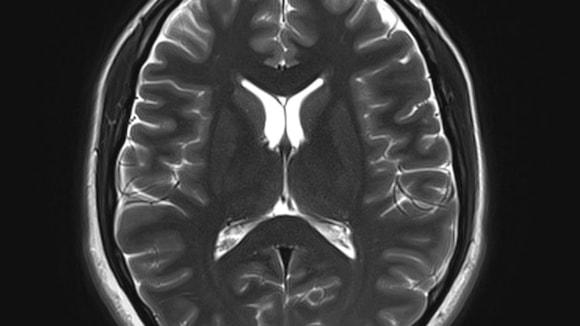
Aug. 26, 2024 — Data scientists and clinical researchers will use brain scans from the entire Scottish population to build a software tool that they hope will help predict a person’s risk of dementia.
The team from the Universities of Edinburgh and Dundee, has approval to use a unique, large data set made up of CT and MRI brain scans from patients in Scotland from 2008 to 2018, representing 1.6 million images.
Approval comes from the Public Benefit and Privacy Panel for Health and Social Care, a part of NHS Scotland.
The team will use artificial intelligence and machine learning to analyze the image data alongside linked health records such as demographics and treatment history, without patients being identifiable, to find patterns that could indicate a person’s risk of developing dementia.
The ultimate aim is to build a digital healthcare tool that radiologists can use when scanning for other conditions to determine a person’s dementia risk, and to diagnose early stages of related diseases, such as Alzheimer’s.
Isolating a patient group with a high risk of dementia will enable the development of more precise treatments for various types of dementia, mostly Alzheimer’s and vascular dementia.
The data will be held safely in the Scottish National Safe Haven, commissioned by Public Health Scotland, which provides a secure platform for the research use of NHS electronic data.
The project, called Scottish AI in Neuroimaging to predict Dementia and Neurodegenerative Disease (SCAN-DAN), is one of three ‘pathfinders’ from global research collaboration NEURii, which launched a year ago. Comprising global pharmaceutical company Eisai, Gates Ventures, the University of Edinburgh, national health data science organization Health Data Research UK and medical research charity LifeArc, NEURii aims to translate world-class data, neurology and digital sciences into projects that can enhance quality of life for people living with dementia.
The NEURii collaboration provides funding and expertise to the pathfinder projects to remove barriers to getting digital health tools to market. The research teams are also supported by Edinburgh Innovations, the University of Edinburgh’s commercialization service.
For more information, please visit the website for Edinburgh Innovations, the University of Edinburgh’s commercialization service.

 October 02, 2026