December 22, 2015 — The American College of Radiology (ACR) applauded the U.S. House of Representatives for including access to imaging care protections for the most sick and injured Medicare beneficiaries and women seeking mammograms in the House-passed Consolidated Appropriations Act.
“The ACR, its member physicians, patients and others have worked with Congress to improve and safeguard patient access to vital imaging care through the protections in this bill. The access to care that these steps will allow can literally mean the difference between life and death for many Americans. We urge the Senate to pass the bill and the President to sign it into law with all haste,” said Bibb Allen, Jr., M.D., FACR, chair of the American College of Radiology Board of Chancellors.
Thanks to a movement spearheaded by the ACR, the bill includes an 80 percent roll-back (from 25 percent to 5 percent) of a Multiple Procedure Payment Reduction (MPPR) to Medicare reimbursement for interpretation of advanced imaging scans performed on the same patient in the same session, on the same day. In recent years, the Centers for Medicare & Medicaid Services (CMS) applied a 25 percent MPPR to the professional component of these services. Beginning Jan. 1, 2017, the bill caps any reduction at 5 percent. This is more in line with peer-reviewed research that shows that any efficiencies gained in that scenario are variable and, at most, a fraction of what CMS contends, but has never produced documentation to support. In fact, the ACR said that CMS consistently ignored a statutory mandate in the Protecting Access to Medicare Act of 2014 requiring the agency to publicly disclose the data it used to justify what the association calls flawed funding cut.
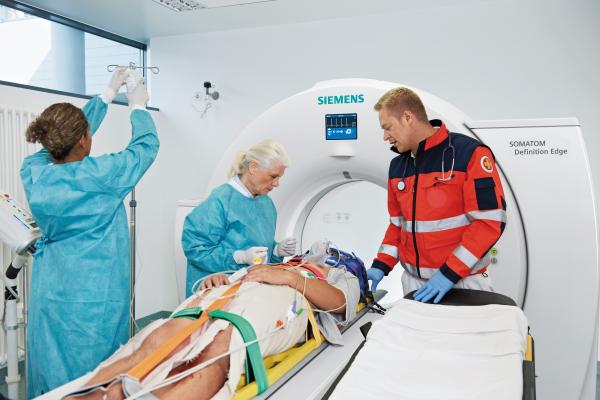
“This MPPR rollback eases the impact on access to needed imaging care for auto accident and stroke victims, those with widespread cancer, and others who often require interpretations by different doctors to recover. Physicians and lawmakers worked together to ensure adequately-covered access to this lifesaving care. Patients and providers will benefit from this, once the bill is passed by the Senate and signed into law and implemented by CMS,” said Geraldine McGinty, M.D., MBA, chair of the American College of Radiology Economics Commission.
ACR-backed Protecting Access to Lifesaving Screenings Act (PALS Act) language included in the bill will continue mandatory mammography insurance coverage for millions of women nationwide. The PALS Act provision delays implementation of U.S. Preventive Services Task Force (USPSTF) draft breast cancer screening recommendations for two years.
The Affordable Care Act (ACA) requires private insurers to cover exams or procedures given a grade of “B” or higher by the USPSTF. The Task Force gave routine screening of women ages 40–49 a grade of “C” and gave a “B” grade only to biennial (every other year) screening for women 50–74. This would indicate that women ages 40–49 who choose routine screening and those 50–74 who want to be screened annually would not be guaranteed coverage if these draft recommendations were implemented. This would particularly impact women in underserved and rural areas.
“The protections in this legislation allow women ages 40-and-over who choose to get an annual screening mammogram to be covered, with no copay, for these lifesaving exams. The bill also allows time for breast cancer experts to properly vet the USPSTF recommendations and the process by which they were created as well as more recent literature on mammography screening. This will help ensure sensible screening policy that saves the most lives and minimizes any viable screening concerns” said Debra Monticciolo, M.D., FACR, chair of the American College of Radiology Breast Imaging Commission.
For more information: www.acr.org
 October 09, 2026