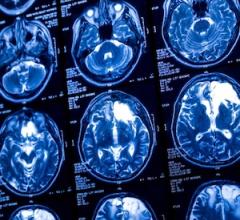
July 6, 2010 – The development of a new magnetic resonance imaging (MRI) technology, which may revolutionize the way medical conditions are diagnosed and treated, is to take a major step forward as a $10.6 million research center is established at the University of York.
Hyperpolarization with parahydrogen is a technique developed at the university that can dramatically increase the sensitivity of MRIs. It is hoped hyperpolarization will eventually be used to help doctors make diagnoses in minutes that currently take days and tailor treatments more accurately to the needs of individual patients.
The research team, led by professors Simon Duckett and Gary Green, of the departments of chemistry and psychology respectively, has secured a grant from the Wellcome Trust and Wolfson Foundation, as well as financial support from industrial partners and the university, to build the York Centre for Hyperpolarisation in Magnetic Resonance Imaging.
“Although MRI is already an incredibly useful technique, its sensitivity is in fact very low, rather like finding a needle in a haystack, which makes it difficult to detect the early stages of disease. It can also be very slow, limiting the way MRI is used in clinical settings,” Duckett said.
The York Centre will bring together researchers from across the departments of chemistry, psychology, biology and the Hull York Medical School to develop this technology. The team will also be working with professor Jürgen Hennig of the University Hospital Freiburg, one of the world’s leading experts in the medical application of MRI technology.
Hyperpolarization involves transferring the magnetism of parahydrogen to molecules, making them more visible to nuclear magnetic resonance, an important research tool in chemistry, and magnetic resonance imaging. The new center’s early research program will develop the chemical basis of this method to make it suitable for medical applications.


 October 05, 2026