Could earlier diagnosis and pre-symptomatic disease detection truly lead to disease prevention? Healthcare is on the cusp of a paradigm shift from a reactionary to a preventative approach to managing disease through diagnostic imaging and radiolabeled probes. So what is holding it back?
Benefits of early detection
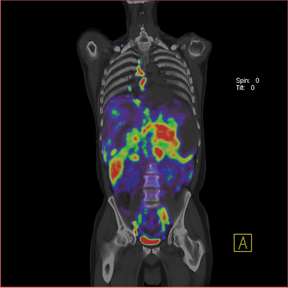
Early diagnosis of cancer has been proven to greatly enhance cancer-patient survivability. This fact was recently acknowledged by the Centers for Medicare and Medicaid Services in its determination to significantly expand coverage of positron emission tomography (PET) scans performed in both the initial and subsequent evaluation of patients with many types of cancer. Now many more cancer patients can receive Medicare coverage for at least one PET scan prescribed by their physicians for initial treatment strategy evaluation.
The chair of the American College of Radiology Board of Chancellors, James H. Thrall, M.D., FACR, radiologist-in-chief, Massachusetts General Hospital, and professor of Radiology, Harvard Medical School, added, “Expanded CMS coverage for PET is a tremendous step forward for cancer care in this country. The NOPR is a shining example of how the medical community can interact with government on research that can ultimately save and extend patients’ lives.”
CMS however is slow to expand this policy to other diseases, and preventative care in the United States is lagging behind Europe. Like many leading medical imaging manufacturers, GE Healthcare is encouraging radiologists to transform healthcare delivery from a focus on treating late disease toward prevention through pre-symptomatic disease detection. At this year’s European Congress of Radiology (ECR) in Vienna, Germany, industry encouraged clinicians to redirect healthcare resources into developing better ways to predict, diagnose, treat and monitor disease, and provided several reasons why they should do it.
10 reasons to believe in the “early health” model of care:
1. At least 80 percent of premature deaths from cardiovascular heart disease and strokes
could be prevented.1
2. Alcohol, cholesterol and tobacco are the main risk factors driving disease incidence; all three of them are controllable by patients.1
3. Mammography could potentially save 47,000 lives over a 14-year period in a population of 58 million women ages 40-74 (U.S. study).2
4. Early identification of Parkinson’s disease allows the potential for better outcomes and reduced costs: from $6,867/year if diagnosed at Stage I to $34,659/year at Stage IV.3
5. Colorectal cancer’s five-year survival is 90 percent if detected at an early-localized stage; however, only 39 percent of colorectal cancers are diagnosed at this stage.4
6. A 1 percent increase in survival rate from diseases like cancer would save $344 billion per year in Europe.5
7. Osteoporosis usually lies undetected. By 2050, the worldwide incidence of hip fracture in men is projected to increase by 310 percent and 240 percent in women.6
8. By 2020, cardiovascular disease, injury and mental illnesses are predicted to be responsible for about one-half of all deaths and one-half of all healthy life years lost, worldwide.7
9. The “early health” model could significantly impact clinical outcomes, cost of care and quality of life in patients with obesity, leading to cardiovascular and other disease.8
10. About one in six men will be diagnosed with prostate cancer during their lifetimes. Modern methods of detection and treatment mean that many prostate cancers are now found earlier and can be treated more effectively.9
Source: GE Healthcare
References:
1. World Health Organization
2. Jemel A, Tiwari RC, et al.: Cancer statistics 2004. CA:Cancer L Clin 2004, 54:8- 29
3. Dodel RC, Singer M, Köhne-Volland R et al. The economic impact of Parkinson’s disease. Pharmacoeconomics. 1998; 14:299-312
4. American Cancer Society. Cancer Facts and Figures
5. Kevin M. Murphy and Robert H. Topel. “The Value of Health and Longevity” Journal of Political Economy.
6. http://www.iofbonehealth.org/#9
7. International Cardiovascular Disease Statistics www.americanheart.org
8. Murray CJ, Lopez AD. Global mortality, disability, and the contribution of risk factors: Global Burden of Disease Study. Lancet 1997; 349: 1436-42
9. http://www.cancer.org/docroot/CRI/content/CRI_2_4_1X_
What_are_the_key_statistics_for_prostate_cancer_36.asp
“The CMS move is based on significant clinical evidence regarding the effectiveness of PET for management of patients with cancer gleaned from the National Oncologic PET Registry (NOPR) which is co-managed by the ACR and ACRIN,” indicated by the American College of Radiology (ACR) in a public statement.
While the extension of coverage for PET is a sign that CMS may be embracing early diagnostic practices, what is certain is healthcare in the United States needs to redirect its resources away from a position of reaction and down the path toward prevention.

 October 07, 2026