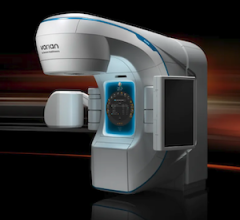
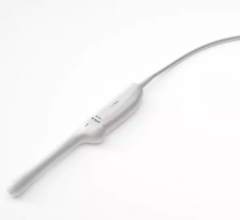
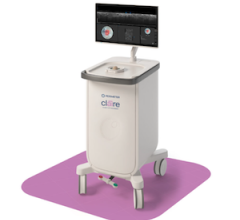
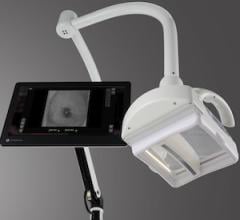
Women who have breast cancer on their left side present a particular challenge to radiation oncologists. Studies have shown that the risk of heart disease is higher in this group of women after radiation treatment. This is because it can be difficult to ensure a sufficient dose of radiation is delivered to the left breast while adequately shielding the heart from exposure. New research shows a woman who holds her breath during radiation pulses can greatly reduce radiation exposure to the heart.
“Radiation therapy is commonly prescribed to patients with breast cancer following surgery as a component of first-line therapy,” said first author Harriet Eldredge-Hindy, M.D., a chief resident and researcher in the department of radiation oncology at Thomas Jefferson University. “We wanted to determine how effective breath-hold could be in shielding the heart from extraneous radiation exposure during treatment of the left breast.”
Recent studies have shown women with cancer in the left breast are at higher risk of heart disease, and that the risk increases proportionately with the dose of radiation the heart is exposed to during treatment. A number of techniques have been developed to reduce exposure to the heart including prone positioning, intensity modulated radiation therapy (IMRT) and accelerated partial breast irradiation. The breath-hold technique allows doctors to monitor a patient’s breath for the position that shifts the heart out of the range of the radiation beam.
Breath-hold Studies
In the largest prospective study to date, following women for eight years post-treatment, 81 women were asked to hold their breath during radiation treatment for breast cancer — a process that was repeated until therapeutic dose was reached. The researchers found that patients capable of holding their breath over the course of treatment had a 90 percent disease-free survival, and a 96 percent overall survival, with a median reduction in radiation dose to the heart of 62 percent. The findings were published online in the journal Practical Radiation Oncology.
“Given that this technique helps to shield the heart during radiation treatment for breast cancer, we routinely offer breast cancer treatment with the breath-hold technique at Jefferson,” said Rani Anne, M.D., associate professor of radiation oncology at Thomas Jefferson University and senior author on the study.
Additional work presented at the 2014 American Society for Radiation Oncology in San Francisco carried the work further in order to determine whether protection from the additional radiation dose in fact translated to a reduction in ischemic heart disease. Anne, together with Eldredge-Hindy, showed that this same cohort of patients will likely have a reduced risk of ischemic heart disease after 10 years. The study showed that patients who held their breath during radiation therapy had only a
1.4 percent rate of ischemic heart disease after eight years of follow up and an estimated rate of
3.6 percent after 10 years.
Editor’s note: This information was provided by Thomas Jefferson University. For more information, visit www.jefferson.edu.
 October 09, 2026