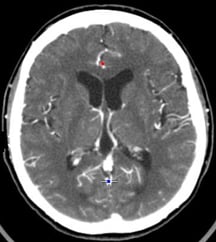
August 22, 2012 — In a head-to-head contest between the New Orleans Criteria (NOC) and the Canadian Computed Tomography (CT) Head Rules (CCHR), the Canadian rules showed higher sensitivity and specificity in predicting neurosurgical intervention for mild head injury. The results of the study, conducted in Tunisia, were published online August 21, in Annals of Emergency Medicine ("Prediction Value of the Canadian CT Head Rule and the New Orleans Criteria for Positive Head CT Scan and Acute Neurosurgical Procedures in Minor Head Trauma: A Multicenter External Validation Study").
"Although clinical decision rules may not perform exactly the same way in all populations, our study suggests that, at least in Tunisia, emergency physicians should use the Canadian CT Head Rule in their routine clinical practice for patients with mild head injury," said lead study author Semir Nouira, M.D., of Fattouma Bourguiba University Hospital in Monastir, Tunisia. "Application of the Canadian rule could potentially lead to reductions in CT scans for mild head injury, one of the most common injuries seen in emergency departments."
Researchers studied medical records for 1,592 patients with mild traumatic brain injury. Patients were primarily assessed on the need for neurosurgical intervention and the presence of traumatic lesions on head CT scan. Sensitivity was 100 percent and specificity was 60 percent on the need for neurosurgical intervention for the Canadian CT Head Rules. Sensitivity was 82 percent and specificity was 26 percent on the need for neurosurgical intervention for the New Orleans Criteria. Sensitivity and specificity on clinically significant head CT findings were 95 percent and 65 percent for CCHR and 86 percent and 28 percent for NOC.
"There is still debate over whether these decision rules could be applied worldwide because they haven't been validated across populations with different demographics and ethnic characteristics," said Nouira. "Therefore, more research is warranted to clearly establish the benefit of the Canadian rule in real life clinical practice."
Annals of Emergency Medicine is the peer-reviewed scientific journal for the American College of Emergency Physicians (ACEP), the national medical society representing emergency medicine. ACEP is committed to advancing emergency care through continuing education, research and public education. Headquartered in Dallas, Tex., ACEP has 53 chapters representing each state, as well as Puerto Rico and the District of Columbia. A Government Services Chapter represents emergency physicians employed by military branches and other government agencies.
For more information, visit www.acep.org.
 October 19, 2026