February 12, 2013 — Cloud computing has the potential to revolutionize healthcare administration by allowing providers to access information from a patient’s medical file at anytime from anywhere, and that means patients receive better and more efficient quality care.
“Everything in healthcare today is so dependent on computers, and cloud computing is the repository for all of these transactions,” says Suzanne Richins, DHA, MBA, FACHE, RN, chair of health information management and healthcare administration at American Sentinel University. “Cloud computing benefits nurses at point of care because no matter where the patient has a diagnostic test, the cloud ensures that data is available everywhere.”
The “cloud” is an intangible but ubiquitous presence in our tech-laden lives, allowing healthcare professionals to access all patient data across multiple devices and from any location with an Internet connection.
As an information technology (IT) strategy, cloud computing took the business world by storm, allowing companies to store massive amounts of data virtually, rather than making a huge investment in developing and maintaining their own information system storage. Yet, healthcare has been a relative latecomer to cloud computing, largely because of the industry’s unique data security, regulatory and patient privacy concerns.
“Laws require protection of pertinent information to ensure both confidentiality and privacy, and before a healthcare organization contracts with a cloud organization, management needs to ensure that the cloud can meet the requirements of both HIPPA and meaningful use,” says Richins.
The mandate to widely adopt electronic medical records (EMRs), however, is expected to change that, and a recent report by research firm MarketsandMarkets projected healthcare-related cloud computing will become a $5.4 billion global industry by 2017, encompassing both clinical and nonclinical applications.
Healthcare Benefits from Cloud Computing
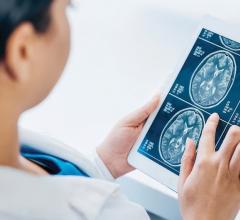
The most significant benefit cloud computing offers healthcare is data access. When patient information is stored in the cloud, providers can access lab results, imaging scans and other pertinent test results at anytime and in any place, allowing for improved care coordination and better decision-making.
“As the move toward accountable care organizations (ACOs) drives the need for a better flow of information between primary care providers, specialists and case managers, clinical use of the cloud is likely to expand to include mobile applications that deliver data to tablets and smart phones,” adds Richins.
Most importantly, cloud-based platforms can allow collaboration between providers in real-time from nearly any device that can connect to the Internet, so healthcare organizations can manage data with more agility when working in the cloud.
Cloud Computing at the Bedside
Cloud computing benefits IT staff, nurse informaticians involved with EMR implementation and even the hospital’s bottom line. But Richins points out that healthcare will start seeing innovative, cloud-based applications that benefit nurses and patients at the point of care.
One example is Ultimate Caregiver, a nurse call system which merges pull cord technology with the power of cloud computing and mobile devices to allow for wireless paging and generated staff response reports. When a patient rings for a nurse, the call signal is processed in the cloud and alerts are sent to nurses in the form of texts, e-mails, pages or phone calls. This allows nurses to be more efficient on the floor, as the closest staff member can respond quickly to the patient and no one is tied to a nursing station to track patient call signals.
The use of cloud computing will also have a positive impact on career nursing opportunities in nursing informatics.
Richins notes that all third-party payers, including the government, require reporting of quality measures, and nurse informaticists are responsible for analyzing the data for reporting to these organizations.
“Nurse informaticists are critical to identification of problems, the root cause and identification of solutions, and now that the payers do not reimburse for certain diagnoses, readmissions and hospital-acquired infections, nurse informatics are critical to the process as all decision-making requires evidence that comes from the data,” says Richins.
Cloud-based computing is also a boon to home health nurses, giving them easy access to accurate data, allowing them to document visits and update charts in real-time and freeing them from the cumbersome daily synchronization routine.
Richins notes that healthcare is in need of nurses who can analyze technologies from both the bedside and IT perspectives. “Health informatics is the new frontier of healthcare and one of the fastest growing fields today. Nurses with a nursing informatics specialization will be in high demand to manage health information systems critical to the mission of health care delivery,” says Richins.
She points out that while opportunities in nursing informatics are plentiful, nursing informatics is not an entry-level career. “RNs who find work in this specialty typically have several years of experience and professional education in both information systems and nursing,” adds Richins.
A registered nurse with an associate degree in nursing can purse a nursing informatics degree by taking the RN to BSN courses or RN to MSN courses. If a nurse already has a BSN, they can enter directly into the MSN program with a concentration in nursing informatics.
For more information: www.americansentinel.edu/health-care/m-s-nursing/m-s-nursing-nursing-in…

 October 07, 2026