The Internet of Things (IoT) has carved an in-road for hackers to just about everything electronic from e-mail servers to automobiles and Internet-connected kitchen refrigerators. Imaging equipment is just a segment of that unsafe world — but a remarkably vulnerable one.
Among patients with up to three brain metastases, the use of stereotactic radiosurgery (SRS) alone, compared with SRS combined with whole brain radiotherapy, resulted in less cognitive deterioration at 3 months.
Cubresa Inc. announced the United States Patent and Trademark Office has issued a U.S. patent for a novel arrangement of imaging sensors and methods for determining sensor positions for 3-D imaging. The new method describes mounting many imaging sensors underneath a flexible substrate could reveal tumors within humans or animals.
July 27, 2016 — A team with funding from the National Institutes of Health has created a new simulator that allows clinicians who perform a complicated ultrasound technique to gain practice on a mannequin before trying it on patients. This is the first simulator for duplex ultrasound scanning, a type of ultrasound used to assess the health of blood vessels.
July 26, 2016 — A new study shows that patients with brain metastases can be treated in an effective and substantially less toxic way by omitting a widely used portion of radiation therapy. These results will allow tens of thousands of patients with this most common form of brain tumor to experience a better quality of life while maintaining the same length of life.
July 25, 2016 — The Centers for Medicare and Medicaid Services (CMS) announced that it expects to launch its new Overall Hospital Quality Star Rating system to report on quality of care at hospitals shortly.
The Imaging Technology News team is saddened to hear of the passing of Raymond Wtulich, manager/marketing communications at Hitachi Medical Systems America.
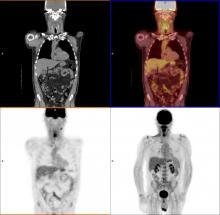
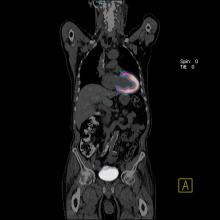
Positron emission tomography (PET) is a nuclear imaging technology (also referred to as molecular imaging) that enables visualization of metabolic processes in the body. The basics of PET imaging is that the technique detects pairs of gamma rays emitted indirectly by a positron-emitting radionuclide (also called radiopharmaceuticals, radionuclides or radiotracer). The tracer is injected into a vein on a biologically active molecule, usually a sugar that is used for cellular energy.
If you enjoy this content, please share it with a colleague