Biologic age, a DNA-based estimate of a person’s age, is associated with future development of breast cancer, according to scientists at the National Institutes of Health. Biologic age was determined by measuring DNA methylation, a chemical modification to DNA that is part of the normal aging process. The study showed for every five years a woman’s biologic age was older than her chronologic or actual age, known as age acceleration, she had a 15 percent increase in her chance of developing breast cancer. The study was published online Feb. 22 in the Journal of the National Cancer Institute.
iSchemaView announced the company’s co-founder Gregory Albers, M.D., has received the Distinguished Clinical Research Achievement Award, presented by the Clinical Research Forum. The Distinguished Clinical Research Achievement Awards are presented to the top two studies that show creativity, innovation, or a novel approach that demonstrates an immediate impact on the health and well-being of patients.

American Society of Breast Surgeons 20th Annual Meeting

Late-breaking results confirm the HeartFlow FFRct (fractional flow reserve computed tomography) Analysis enables efficient identification of which patients, despite symptoms suggestive of coronary artery disease (CAD), have a low risk of adverse cardiovascular events and can safely avoid invasive testing out to one year. These results from the ADVANCE trial were presented as a late-breaking trial during the American College of Cardiology’s (ACC) 68th Annual Scientific Session, March 16-18 in New Orleans, and simultaneously published in the Journal of the American College of Cardiology (JACC): Cardiovascular Imaging.

DrChrono Inc. and 3D4Medical have teamed up so practices across the United States can access 3-D interactive modeling and animation videos from within their electronic health record (EHR) to better educate patients.

A new study positron emission tomography (PET) scans has identified a biomarker that may accurately predict which patients with one type of HER2-positive breast cancer might best benefit from standalone HER2-targeted agents, without the need for standard chemotherapy. The study was conducted by researchers at the Johns Hopkins Kimmel Cancer Center in an effort to further individualize therapy and avoid over-treating patients.


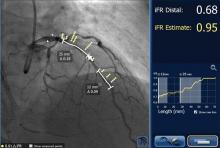
As many as one in four patients who undergo cath lab interventions can benefit from a technology that identifies the location of stenoses not resolved by initially performed percutaneous coronary interventions (PCIs) to relieve restricted blood flow.


Brain magnetic resonance imaging (MRI) without contrast agent is just as effective as the contrast-enhanced approach for monitoring disease progression in patients with multiple sclerosis (MS), according to a new study in the journal Radiology. The findings support the possibility that contrast enhancement can be omitted from routine follow-up scans.


Virtual reality (VR) and its less immersive kin, augmented reality (AR), are gaining traction in some medical applications. But a new entrant, “mixed reality,” may have the inside track in the interventional suite or operating room.


Machine learning is already having an enormous impact on cardiology, automatically calculating measurements in echocardiograpy. And machine learning, which is part of artificial intelligence (AI), is just getting started.


Subscribe Now