Nov. 24, 2025 — Siemens Healthineers is launching artificial intelligence-enabled services to help healthcare providers address a range of challenges from hands-on image interpretation to complex scenario planning for entire healthcare environments. The company’s new radiology services suite1 is designed to span the imaging chain from scheduling to image-generation to reporting. It bundles existing services and new ones like the AI-Enablement Services that can provide radiologists with custom-built summaries of clinically relevant observations, saving time in annotation of images and creation of reports. In addition, the company is enhancing its advisory services with artificial intelligence (AI) to simulate complex scenarios and recommend improvements to operations in hospital departments and other healthcare providers.2
The new offerings will be presented at the 2025 Radiological Society of North America meeting in Chicago.
With increasing demand for diagnostic imaging and a shortage of specialists, pressure on existing staff is growing and patients are having to wait longer for appointments and results. To reduce the burden on radiology teams while helping them work more efficiently, the new, vendor-neutral services suite is designed to comprehensively support radiologists by taking over some of the more mundane processes. In this way, it can help mitigate the effects of staff shortages and reduce radiologist burnout. Pilot projects have shown that by using the new AI-enabled solution, radiologists were able to annotate Chest CT images up to 25 percent faster and experienced noticeably less cognitive load.3 The clinical accuracy of the results remained at the same high level.4
“It is very similar to having a resident physician drafting cases to you, with the tedious work already completed when you open a case. This allows you to move more efficiently through cases and decreases cognitive load,” said William Baughman, MD, radiologist at The MetroHealth System, a nonprofit, public health system in Cleveland, USA, who has already tested the AI offering with his team.
The new AI-Enablement Services are an important component of the Siemens Healthineers radiology services suite, which also includes existing services for remote scanning and reading. Customers can thus obtain support from medical-technical radiologists during image acquisition with magnetic resonance imaging through Remote Scanning Services. If customers need support for the generation of the final report, they can also leverage external expertise through Remote Reading Services, carried out by licensed radiologists from external partner organizations of Siemens Healthineers. In this way, radiology departments can better address staff shortages and organize shifts more flexibly while maintaining standards of care for patients. Siemens Healthineers is already working on complementary Load Balancing and Scheduling Services to match patients and staff with the right scanner at the right time, driving more efficient workflows.
“Together with our clinical partners, we have identified those steps in the radiological process where we as Siemens Healthineers can effectively relieve some burden – by automating or outsourcing routine activities,” said João Seabra, Head of Enterprise Services at Siemens Healthineers. “We look forward to supporting radiology teams with this services suite so that they can focus on providing the best possible care for their patients.”
Artificial Intelligence Complements Advisory Services
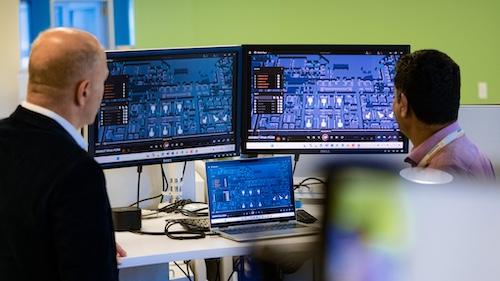
In addition to introducing the new radiology services, Siemens Healthineers is expanding its advisory offering to include the use of artificial intelligence. ActExcell Operational Twin combines predictive simulation with expert guidance to help customers improve operational performance. Based on customer-specific data, the company’s in-house supercomputer simulates future scenarios, and uncovers the most effective improvements and the path to getting there. These questions are far from simple to answer when one considers the complex interplay of staff planning, facility design, layout and patient scheduling, to name just a few factors. The AI agents are designed to achieve specific targets such as reducing patient waiting times or the time that patients need to spend in scanning rooms. Through ActExcell Operational Twin, the company’s advisors can thus suggest data-informed improvements, explain why certain strategies are preferable and provide a robust simulation environment before measures are adopted in real-world settings.
Further information on Siemens Healthineers Radiology Services can be found at www.siemens-healthineers.com/en-us/services/value-partnerships/radiology-services.
- The Siemens Healthineers Radiology Services mentioned herein are not commercially available in all countries. Remote Reading is currently not available in the United States. Scheduling and Load Balancing Service are still under development. Their future availability cannot be guaranteed.
- ActExcell Operational Twin is not commercially available in all countries. If the services are not marketed in countries due to regulatory or other reasons, the service offering cannot be guaranteed. Please contact your local Siemens Healthineers organization for further details.
- The radiologists’ perceived cognitive load decreased by at least 16 percent in pilot studies.
- The statements by customers of Siemens Healthineers described herein are based on results that were achieved in the customer's unique setting. Because there is no “typical” hospital or laboratory and many variables exist (e.g., hospital size, samples mix, case mix, level of IT and/or automation adoption) there can be no guarantee that other customers will achieve the same results.

 October 02, 2026