Photo: DeepHealth
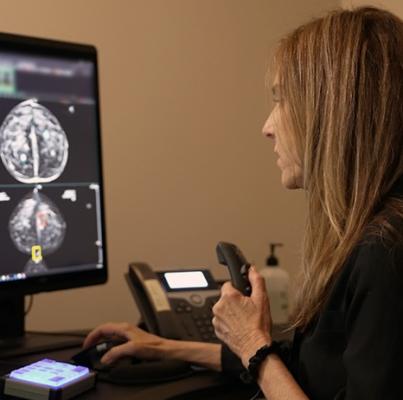
Nov. 17, 2025 — RadNet, Inc. and its wholly owned subsidiary, DeepHealth have announced results from the largest real-world analysis of AI-driven breast cancer screening ever conducted in the United States.1 Published in Nature Health, the findings support the clinical effectiveness and benefit of DeepHealth’s AI technology to deliver equitable results across several racial, ethnic and breast density patient groups.
The AI-Supported Safeguard Review Evaluation (ASSURE) study examined the AI-powered workflow that is at the heart of RadNet’s Enhanced Breast Cancer Detection (EBCD) program. This study included mammograms from over 579,000 women across 109 community-based imaging sites in California, Delaware, Maryland and New York. The research compared state-of-the-art 3D mammography screening to a novel AI-driven protocol that combines DeepHealth’s FDA-cleared computer-aided detection and diagnosis (CADe/x) software with an AI-supported Safeguard Review workflow, which can trigger a second breast imaging expert review of high-suspicion cases — a workflow that RadNet now offers as EBCD.
“Beyond the remarkable results, what sets this research apart is its scale, diversity and real-world applicability,” said Dr. Howard Berger, president and chief executive officer of RadNet. “There has never been a similar study of this size in the United States, much less one with such a diverse patient population, that examines the patient impact and efficacy of AI-assisted breast cancer screening.”
The ASSURE study demonstrated that the AI-powered workflow led to a 21.6% increase in cancer detection rate compared to state-of-the-art 3D mammography screening, while maintaining recall rates within American College of Radiology guidelines2 and increasing positive predictive value by 15%. This workflow is enabled by the applications that make up DeepHealth’s Breast Suite offering.Together, they deliver these benefits across patient populations, including the more than 150,000 Black women enrolled. Black women face 40% higher breast cancer mortality in the United States.3 Furthermore, the ASSURE study showed that the workflow underlying RadNet’s EBCD program delivered a 22.7% boost in cancer detection rate compared to 3D mammography screening for women with dense breasts, who experience both increased cancer risk and diagnostic challenges.4
“Unlike many academically focused studies, these screenings took place at community imaging centers, where most women get their mammograms,” said Dr. Gregory Sorensen, co-author of the ASSURE study and Chief Science Officer at RadNet. “To avoid potential selection bias, the AI-enabled workflow was provided to all patients at no additional charge during the study period. These real-world findings demonstrate how AI can improve access to specialist-level care for women, no matter where they live. When breast cancer is found early, women have far more options for care.”
Launched nationwide at RadNet-affiliated centers in 2023, EBCD runs on the AI that powers the applications within DeepHealth’s Breast Suite, helping detect lesions that are suspicious of being cancer, including those that are considered more difficult to find.6
Learn more about EBCD at myebcdmammo.com or visit Breast Suite at the DeepHealth booth (#1329 South Hall) at the Radiological Society of North America 2025 Annual Meeting (RSNA 2025).
References
- Based on a review of all PubMed results as of November 2025 from the search query: (mammography) AND (AI) AND (cancer detection rate OR real world OR United States).
- Seidenwurm D, Lee CS, Bhargavan-Chatfield M, et al. “Assessing the Recall Rate for Screening Mammography: Comparing the Medicare Hospital Compare Dataset With the National Mammography Database.” American Journal of Roentgenology. 2018.
- “Breast cancer death rates are highest for Black women—again.” American Cancer Society. October 3, 2022.
- “About Dense Breasts.” Centers for Disease Control and Prevention. September 11, 2024.
- Data on file. RadNet.
- Kim et al. “Impact of a Categorical AI System for Digital Breast Tomosynthesis on Breast Cancer Interpretation by Both General Radiologists and Breast Imaging Specialists.” Radiology: Artificial Intelligence. February 7, 2024.
 October 09, 2026