Photo: Echolight
Oct. 31, 2025 — Echolight plans to demonstrate its bone density scanning technology at the Radiological Society of North America (RSNA) 2025 Congress in Chicago (Nov. 30 to Dec. 4).
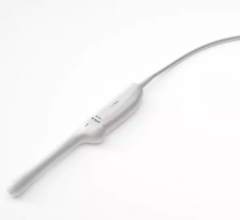
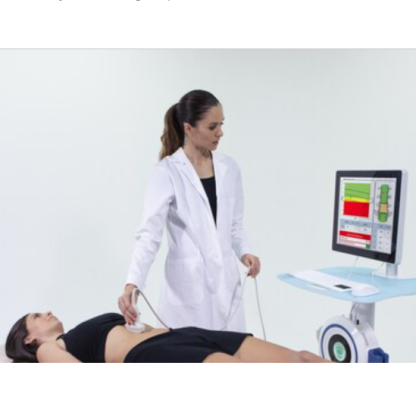
Echolight's REMS (Radiofrequency Echographic Multi-Spectometry) technology measures bone density and microarchitecture without using the radiation of traditional x-ray scans but instead through a simple ultrasound scan of axial anatomical sites such as the spine and femur. This radiation-free technology allows physicians to perform repeated scans for monitoring bone health over time and is safe for use with special subsets of patients including pregnant patients, oncology patients and pediatric patients. In addition, the ability to automatically exclude artifacts commonly present with other densitometry procedures yields a highly reliable diagnostic assessment. No special lead-lined room is needed, and the patient can be positioned as needed for the exam.
Two new studies have been published confirming the validity of REMS and REMS study results. The first can be found at this link and described herein by Mike Yuja, Chief Commercial Officer, Echolight USA:
"This important publication marks a pivotal moment for the clinical adoption of REMS technology worldwide. By establishing clear practice parameters, international experts have reinforced the role of REMS as a reliable, accessible, and cost-effective solution for bone health assessment across diverse patient populations. As this framework becomes integrated into routine practice, clinicians can confidently rely on REMS to deliver accurate, reproducible results—empowering earlier diagnosis, better monitoring, and improved outcomes in bone health management."
The second study highlights a groundbreaking opportunity to apply Radiofrequency Echographic Multi-Spectrometry (REMS) — a safe, non-ionizing technology — to evaluate bone health in pregnant women. Traditionally, understanding how bone resorption contributes to fetal calcium needs during pregnancy has been limited by the use of ionizing or impractical diagnostic methods.
Mike Yuja continued, "In this prospective study involving 164 healthy pregnant women, REMS was used to measure femoral neck bone mineral density (BMD) once in each trimester. The findings revealed a significant reduction in BMD during the second and third trimesters. Importantly, lack of calcium, vitamin D, and multivitamin supplementation was strongly associated with greater bone loss, and fast bone loss correlated with higher gravidity. These results open a remarkable clinical window for REMS technology, demonstrating its potential as a powerful, radiation-free tool to assess bone changes dynamically throughout pregnancy."
Stop by the Echolight Booth #3165 for a copy of this study and to speak to the team.
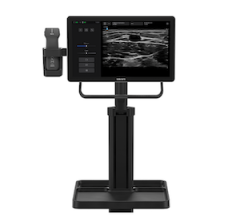
Echolight's portable solution measures bone quantity and quality simultaneously, through evaluation of bone mineral density at the lumbar vertebrae (L1-L4) and the femoral neck providing all common parameters of the diagnosis of osteoporosis BMD (g/cm2), T-scores, and Z-score. It also measures fragility score through an independent assessment of internal bone structure to evaluate the imminent risk of fracture in 5 years through dedicated statistical and spectral analysis.

 October 07, 2026