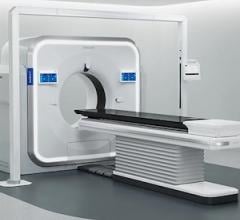
As the volume of medical images continues to grow exponentially, so does the need for efficient and secure methods to manage, process and analyze this medical data. (Photo: CitiusTech)
Almost two-thirds of health systems are already using (or plan to use) the cloud for storing and viewing medical images. CT scans, MRIs and X-rays are now routinely captured, stored, and shared online. The shift makes sense: the cloud makes it easier to scale, collaborate across locations, and apply AI models to large datasets. But as hospitals move more of their imaging to the cloud, they’re also discovering that it brings a new set of challenges along with those advantages.
When an image leaves the four walls of a hospital and moves across distributed systems, the risks multiply. This means to retain trust in the system; leaders have to ask harder questions. How do you guarantee that it retains its fidelity? Can it be retrieved instantly in the middle of an emergency? Can you ensure the metadata isn’t stripped, exposing patient safety issues? Can we be sure that only the right clinician, in the right role, has access at the right time? These are no longer theoretical questions. They’re daily operational challenges, and they’re why testing cloud-based imaging platforms has become a boardroom issue, not just a technical one.
Why Rigorous Testing Matters
Testing in this new world can’t be reduced to a checklist of “does the feature work” or whether a PACS system can pull up a scan. The focus of imaging on cloud must evolve from testing functionality to testing trust. It has to ask a broader question: does the entire ecosystem perform safely, securely and reliably when lives depend on it?
Think about what happens when an MRI moves through a cloud pipeline. It’s encrypted, stored in a vendor archive, retrieved for review, maybe annotated by an AI model, and then shared with another system or physician. At every step there’s a risk — it could be an access control gap, a protocol misalignment or a performance slowdown. Without validating these touchpoints, healthcare players risk efficiency and more importantly undermine trust in the system.
To maintain imaging fidelity, security, standards conformance, performance under load, interoperability with EHRs and AI tools, and regulatory compliance all need to be tested continuously. Beyond these mechanics, the workflows themselves must be validated. What happens if a corrupted file appears? Does the system fail? If a network challenge happens, does the process recover without data loss?
The Layers That Must Be Tested
Building reliability and trust in imaging systems takes more than just checking a few boxes. Security, performance and compliance all have to work together — because an image that loads perfectly on its own might still fail once it’s inside a live PACS environment.
- Security: Every image and report must stay protected with encryption both at rest and in transit. Access should always be role-based, and every view, edit or share must leave behind a tamper-proof audit trail. Security testing needs to go beyond the basics, simulating real-world risks like stolen credentials, privilege escalation or emergency “break-glass” access to confirm that audit trails and safeguards hold up. Regular penetration testing, encryption checks, and threat modeling help maintain compliance with HIPAA, GDPR and data-sovereignty laws.
- Performance under pressure: As imaging moves from on-premises to the cloud, it faces a new set of performance challenges. Systems must be able to handle thousands of uploads or downloads at once without slowing down. Radiologists used to instant access from local servers won’t tolerate long waits — even a few seconds of lag can cause frustration. That’s why performance testing must replicate real clinical conditions and verify retrieval speeds across different networks. It also needs to test for failover, redundancy and caching behavior when systems are under heavy load.
- Compliance Regulations like HIPAA, GDPR and regional data laws demand ongoing verification — not a one-time sign-off. Automated audit scripts and regular penetration tests should be part of standard QA. Testing should confirm GDPR readiness explicitly, including data localization, consent handling and cross-border transfers. Certification-based test suites can help QA teams prove the system is “GDPR-ready,” not just “compliant by assumption.”
In addition, workflows across the imaging ecosystem — from uploading and annotating to sharing across networks — must be tested end to end to ensure reliability under real-world conditions.
For instance, error handling can’t be left to chance. That means deliberately simulating corrupted files, network drops or wrong inputs to see how the system reacts. Just as important is making sure everything speaks the same language. DICOM is still the backbone of medical imaging, but newer web standards like DICOMweb and FHIR Imaging are becoming common. Even a small mismatch between them can break workflows or strip out vital metadata. That’s why interoperability testing must confirm that data moves smoothly between PACS, EHRs and AI tools — quickly, accurately and without losing any context — even under different network speeds, compression levels or IP configurations.
The Challenges
Of course, saying “test everything” is easier than doing it. Medical imaging brings unique hurdles to testing. File sizes are massive, which makes creating and managing test datasets complex. In addition, privacy laws make it risky to use real patient images, yet synthetic datasets fail to catch subtle issues. Many hospitals also live in hybrid environments, with part of their imaging stack on-prem and part in the cloud, complicating integration testing. What looks seamless in a lab may fail when firewalls, legacy PACS and distributed EHRs come into play.
And then there’s the regulatory backdrop. HIPAA, GDPR and country-specific data protection rules evolve constantly and a deployment that was compliant last year might not be today. This means testing has to be an ongoing discipline, woven into the lifecycle of every release.
Making Testing Easier and Cloud Adoption Safer
So how do you manage this complexity without slowing innovation? The answer lies in strategy as much as tooling.
- Start with better data: Testing is only as good as the data behind it. Organizations need realistic, anonymized datasets that make validation meaningful without exposing patient information. Synthetic data can now generate lifelike images that mirror the complexity of real scans giving teams the confidence to test safely and thoroughly.
- Build testing into the cloud journey from day one: Testing shouldn’t be an afterthought. It needs to be part of the development cycle itself with automated regression, performance and security checks embedded in CI/CD pipelines. That way, issues are caught early, before they can ripple across environments.
- Validate interoperability on purpose: Too often, teams assume that if systems “follow standards,” they’ll automatically work together. In reality, that’s rarely the case. Purpose-built conformance tools and sandboxed integrations help identify mismatches early, before they cause costly delays. This is where collaboration matters between software vendors, health systems and AI providers.
- Keep monitoring once you go live: Testing doesn’t end at launch. Real-world metrics such as response times, error rates, compliance drift should continuously feed back into your testing strategy. That ongoing monitoring acts as a safety net, ensuring performance, reliability, and compliance stay strong over time.
We used this approach while working with a global medical technology innovator that wanted to automate testing for its X-ray systems across fixed and mobile platforms. Within three months, the team automated more than 600 test cases, creating reusable scripts to eliminate duplicate entries and ensure smooth operation across environments. The foundation we built now supports 5,000 automated test cases each year — making validation faster, standardized, and far more scalable across their radiology products.
Looking Ahead
The cloud is not just changing where imaging data resides; it’s redefining how it’s used, shared, and trusted. While the promise of cloud is real, the price of realizing that promise is rigor —in testing, in validation and in ongoing oversight.
As medical imaging systems evolve into AI-enabled, cloud-native ecosystems, the testing landscape must evolve from static validation to dynamic, risk-based assurance. Leaders should be asking: Have we engineered trust into our imaging systems? Have we validated not just performance, but compliance and security at scale? Do our audit trails stand up to regulatory scrutiny? Can our systems recover gracefully when things go wrong?
Today, the industry has a chance to set a new benchmark. If we build with trust at the core, medical imaging on the cloud won’t just be a better infrastructure choice. It will be the foundation of safer, smarter, and more connected healthcare.
 Shujah Dasgupta, Vice President, Medical Technology, CitiusTech, is a seasoned health IT professional with more than two decades of experience in designing and developing digital health solutions that address real-world clinical needs. Throughout his career, he has spearheaded numerous strategic initiatives across the medical technology landscape, driving the development of next-generation healthcare products that blend clinical insight with innovation. His leadership and vision have been instrumental in shaping global healthcare standards, with significant contributions to renowned organizations such as HL7, DICOM, and IHE.

 October 08, 2026