The Digital Imaging and Communications in Medicine (DICOM) standard is the bedrock of interoperability, yet achieving its full potential within complex hospital environments remains a challenge. This is a particular challenge for pathology, where legacy infrastructure means it has the furthest to go to achieve DICOM standardization.
But the clock is ticking. So, let's be realistic. Instead of waiting for the DICOM utopia, we should embrace middleware as a pragmatic solution to quickly bridge the gap between existing systems and modern applications.
The Interoperability Imperative
According to the Office of the National Coordinator for Health Information Technology (ONC), 60 percent of healthcare providers in the U.S. struggle with fragmented data due to interoperability issues between legacy systems and modern software. This can compromise patient care and increase operational costs.
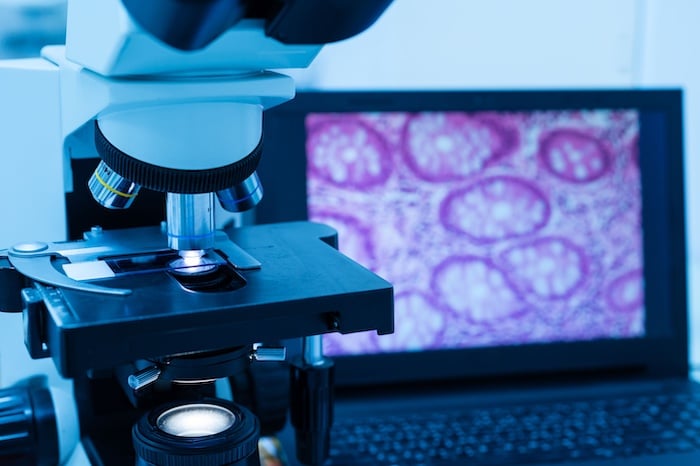
DICOM standardization would solve the problem, but progress is slow — particularly in pathology where DICOM’s extension to Whole Slide Images (WSIs) was only finalized in 2010. As such, in the absence of a DICOM standard, digital pathology vendors developed their own, proprietary solutions. As a result, most pathology departments rely on many different non-standard, legacy formats when it comes to the wide variety of vendors, file formats, extensions and compression formats
So where does that leave us?
The Magic of Middleware
Middleware (in this case universal image management software) is essential for solving the DICOM challenge. It acts as a "broker" or "translator" between systems, allowing different WSI formats to communicate and interact.
Some of the roles that Middleware can provide include:
- Image ingestion: An agnostic pixel broker ingests a Whole Slide Imaging (WSI) file, regardless of the scanner or image type, eliminating the need for digital pathology labs to require separate viewers for different scanners. This data is then converted into a smaller, standardized, universal format for viewing and management.
- Image management: Images can then be managed and served from a range of different locations including hardware, virtual, or cloud storage. Metadata and annotations can also be added to the images at this stage by AI workflows or pathologists, enhancing the image with patient information or other clinical details.
- Diagnostic viewing: Web-based browsers are then used to view the images from anywhere with an internet connection, meaning they can be easily accessed by clinical teams on and off-site, something likely to benefit the increasing number of integrated health systems and hospitals spread across different sites.
- Integration: Integration with Laboratory Information Systems (LIS), Anatomic Pathology LIS (APLIS) systems, as well as Electronic Medical Records (EMR) is then made possible via HL7 or FHIR, with Application Programming Interfaces (APIs) and software development kits (SDKs) used to facilitate integration with third-party AI software.
- Interoperability: Universal image management software acts as the critical glue connecting scanners, LIS, AI, and pathologists. This creates a system where digital pathology and other diagnostic departments can seamlessly exchange, interpret, and use data, enabling the free flow of data.
Bridging the Gap
Is middleware a substitute for the end-goal of DICOM standardization in digital pathology? No. Digital pathology still requires significant changes to how data is captured, stored, accessed, and shared. That demands a universal language, and that language is DICOM.
Having said that, middleware offers an immediate workaround and buys us the time needed to make those changes to our digital pathology infrastructure.

Liam Canavan is Healthcare Lead at Loadbalancer.org. He can be reached at [email protected].
 September 09, 2026