July 22, 2025 — GE HealthCare has topped a U.S. Food and Drug Administration (FDA) list of AI-enabled medical device authorizations for the fourth year in a row with 100 listed authorizations to date in the U.S.
This milestone reflects GE HealthCare’s continued research and development investment and focus on developing AI solutions to advance precision care by enhancing medical devices across the care journey. Smart devices, software and cloud-based solutions, which are central to GE HealthCare’s precision care strategy, help enhance outcomes for patients, improve the daily work of care teams and boost healthcare professional efficiency.
“Our sustained leadership in AI-enabled medical devices reflects our commitment to research and development, which is powering the creation of next-generation solutions. These solutions are designed to address the toughest challenges our customers are facing including care team shortages and burnout, rising costs, and inefficient workflows,” said Dr. Taha Kass-Hout, GE HealthCare’s Global Chief Science and Technology Officer. “As we continue to drive the industry forward, we remain committed to doing so in a responsible way, building in our Responsible AI principles at every stage of our product development which include a focus on safety, validity, transparency, explainability, and fairness.”
The FDA’s webpage, Artificial Intelligence-Enabled Medical Devices, provides a list of device authorizations, granted through 510(k) clearances, De Novo requests or by premarket approval (PMA). GE HealthCare’s 100 authorizations to date demonstrate innovation across imaging modalities and care pathways including oncology, cardiology, and neurology, helping to ease the burden of care and improve workflows for healthcare systems. Examples of GE HealthCare’s AI solutions include:
- AI-based Auto Positioning uses deep learning to automatically detect anatomical landmarks, which are used to determine the patient’s orientation inside computed tomography (CT) and positron emission tomography (PET)/CT devices, including Revolution Apex platform and Omni Legend. The solution helps minimize the action required by technologists into a single click operation, enabling faster patient positioning compared to traditional manual positioning operations.1
- AIR Recon DL is a pioneering deep learning algorithm for image reconstruction that enables radiologists to achieve pin-sharp images quicker. By combining magnetic resonance imaging (MRI) with deep learning, AIR Recon DL reduces artifacts, enhances image clarity, and shortens scan times by up to 50%.2 It has been estimated that more than 50 million patients have been scanned since its launch in 2020.3
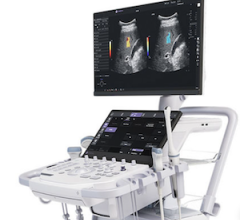
- The LOGIQ Series ultrasound portfolio of systems empowers clinicians to scan, diagnose, and treat a wide range of patients and conditions. With AI-powered automation, real-time workflow enhancements, and exceptional image quality, the LOGIQ Series is designed to facilitate faster, more efficient scanning and support diagnostic precision. Intelligent anatomy recognition enables dynamic image optimization as well as repeatable and reproducible automated measurements and results – providing elevated accuracy and greater diagnostic confidence.
- Precision DL is deep learning-based image processing, available on the Omni Legend PET/CT system, that enhances image quality in PET/CT scans, providing clinicians with a powerful solution to aid in precise diagnoses, treatment planning, and monitoring with the image quality performance benefits typically associated with hardware-based Time-of-Flight (ToF) reconstruction, without compromising sensitivity, including improved contrast-to-noise ratio, contrast recovery4, and quantitative accuracy.5
- Venue Family point-of-care ultrasound systems with AI-powered Caption Guidance™ software provides real-time, step-by-step guidance to help even new ultrasound users capture cardiac views and diagnostic-quality images successfully.
“We’re accelerating the pace of innovation to meet the urgency of today’s healthcare challenges. Reaching this milestone is also an important step along our journey of evolving from an imaging company to a healthcare solutions provider, enabling us to deliver holistic and integrated solutions that meet our customers’ needs today and will help enable them to stay ahead in a rapidly evolving healthcare environment,” said Kass-Hout.
GE HealthCare is pushing the boundaries of innovation by fostering new ways to use AI, cloud, and software to move the future of healthcare forward in a responsible way, across the care journey, and at the hospital system level. These projects and innovations run the gamut from early R&D to commercially available solutions, often the result of working closely with leading medical institutions, universities, and technology companies to bring in the best thinking from industry, technology, and academia. Regardless of a project’s maturity, GE HealthCare combines deep healthcare expertise, a commitment to responsible innovation, and pioneering spirit to help customers address pressing global challenges from aging populations, chronic disease management, remote care, and more.
For more information about GE Healthcare’s AI-enabled medical device and enterprise software solutions, visit www.GEHealthCare.com.
1 “AI-based Auto Positioning,” February 2021, www.gehealthcare.com/-/jssmedia/gehc/us/images/products/revolution-ascend/files/ai-auto-positioning-white-paper.pdf?srsltid=AfmBOooIyJqujqRZlX8hYx20aPDSwn7oGMbtiGzvym3nGEMd_TqqtpFy.
2 AIR™ Recon DL, https://www.gehealthcare.ca/en-ca/products/magnetic-resonance-imaging/air-recon-dl.
3 Calculated using IB data with an estimation of 20 scans per day, 5.5 days per week, from 4 weeks after delivery to April 2025.
4 Precision DL with Omni Legend 32cm data improves Contrast Recovery (CR) by 11% on average and Contrast-to-Noise Ratio (CNR) by average of 23% as compared to non-ToF reconstruction. CR and CNR demonstrated using clinical data with inserted lesions of known size, location, and contrast. Using data from Omni Legend 32 cm, CR and CNR were measured using High Precision DL and QCHD.
5 Precision DL with Omni Legend 32cm improves feature quantitation accuracy by 14% as compared to Discovery MI with ToF reconstruction, at comparable noise level. Quantitation accuracy demonstrated using clinical data with inserted lesions of known size, location, and contrast (ground truth). Feature SUVmean from Omni Legend 32 cm with High Precision DL compared to SUVmean from Discovery MI 25 cm with QCFX.
 October 19, 2026