Getty Images
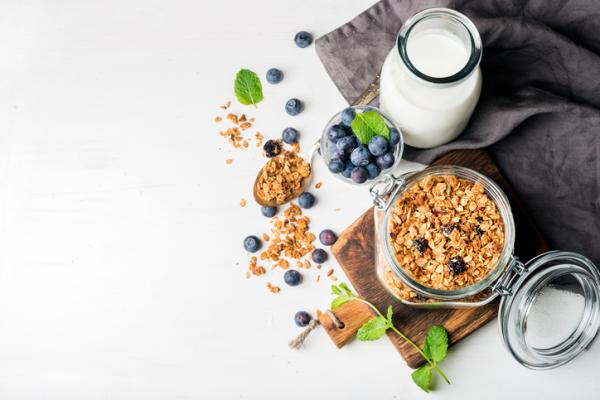
October 7, 2020 — Loved or hated, the humble oat could be the new superfood for cancer patients as international research shows a diet rich in fiber could significantly reduce radiation-induced gut inflammation.
Conducted by the University of Gothenburg, Lund University and the University of South Australia, the preclinical study found that dietary oat bran can offset chronic gastrointestinal damage caused by radiotherapy, contradicting long-held clinical recommendations.
Gastroenterology and oncology researcher UniSA’s Andrea Stringer, M.D., says the research provides critical new insights for radiology patients.
“Cancer patients are often advised to follow a restricted fibre diet. This is because a diet high in fibre is believed to exacerbate bloating and diarrhoea – both common side effects of radiotherapy,” Stringer said. “Yet, this advice is not unequivocally evidence-based, with insufficient fibre potentially being counterproductive and exacerbating gastrointestinal toxicity.
“Our study compared the effects of high-fibre and no-fibre diets, finding that a fibre-free diet is actually worse for subjects undergoing radiotherapy treatment," she continued. “A diet without fibre generates inflammatory cytokines which are present for a long time following radiation, resulting in increased inflammation of the digestive system. Conversely, a fiber-rich diet decreases the presence of cytokines to reduce radiation-induced inflammation, both in the short and the long term.”
Intestinal issues following radiotherapy are problematic for many cancer survivors.
“In Europe, approximately one million pelvic-organ cancer survivors suffer from compromised intestinal health due to radiation-induced gastrointestinal symptoms,” Stringer said. “This is also commonplace in Australia and around the world with no immediate cure or effective treatment. If we can prevent some of inflammation resulting from radiation simply by adjusting dietary fibre levels, we could improve long-term, and possibly life-long, intestinal health among cancer survivors.”
For more information: www.ncbi.nlm.nih.gov/
 September 17, 2026