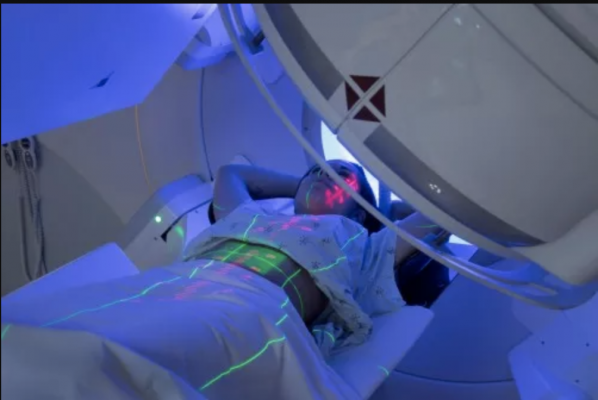
Women are more likely to be cured of cancer by radiotherapy but the side effects are worse. Image by Mark Kostich
March 30, 2020 — Women undergoing radiotherapy for many cancers are more likely than men to be cured, but the side effects are more brutal, according to one of Australia’s most experienced radiation oncology medical physicists.
University of South Australia (UniSA) Professor of Medical Radiation, Eva Bezak, said women are generally more sensitive to radiation than men, but this is not considered in international guidelines for radiation dosages. Current guidelines are generally based on a person’s height, weight or BMI, and radiobiological responses of the general population.
In a paper published in Critical Reviews in Oncology/Hematology, Bezak and her colleagues Louis de Courcy from University College Dublin and Professor Loredana Marcu from the University of Oradea in Romania highlight the need for gender to be taken into account when administering radiation.
“It is clear that gender plays a role in the occurrence and response to therapy of many diseases,” Bezak said. “For example, it is already well established that men are more susceptible to head, neck and blood cancers and women are more prone to auto immune diseases as well as developing osteoporosis.”
Scientists also know that individual responses to radiotherapy are up to 80 percent determined by genetics.
So, where do we start with gendered medicine?
“The next step is to ensure that we use both male and female mice even in our pre-clinical testing so we can get a better understanding of how gender influences treatment outcomes," she stated. “It is also important to collect data retrospectively so we can compare the radiotherapy outcomes for men and women who were prescribed radiotherapy for the same cancer.”
It is a double-edged coin for men, too. Because they are more radio-resistant than women, their healthy tissues are better protected when receiving radiotherapy with fewer side effects, but their long-term survival rates are shorter.
The differences in radiation responses are highlighted by two major events in history: the Chernobyl nuclear reaction disaster in 1986 and the atomic bombings of Hiroshima and Nagasaki in 1945.
Bezak said following Hiroshima and Nagasaki, the incidence of cancer in Japan was much higher in women (58 percent) compared to men (35 percent).
Likewise, after the Chernobyl nuclear accident, millions fewer girls were born to irradiated men and women were at greater risk of endocrine imbalance, thyroid cancer and brain tumours.
The one area that does appear to give women some protection against radiation is the female hormone oestrogen, which has a neuroprotective effect during head irradiation.
“As healthcare becomes progressively more tailored to the individual, gender is a factor that can no longer be disregarded. It needs to be taken into account as an independent prognostic factor,” Bezak said.
A video explaining the differences in radiation outcomes between men and women can be viewed at https://youtu.be/BtDniRA7DMs
 October 07, 2026