News | Information Technology | February 04, 2020

QyScore allows automated quantification of a broad portfolio of MRI markers that are key to support early diagnosis and clinical monitoring of neurodegenerative disorders

Qynapse, a medical technology company, announced that it received U.S. Food and Drug Administration (FDA) 510(k) clearance for its QyScore software

February 4, 2020 — Qynapse, a medical technology company, announced that it received U.S. Food and Drug Administration (FDA) 510(k) clearance for its QyScore software.

 
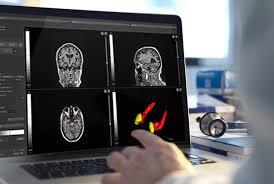
QyScore provides robust and precise analyses of brain MRI markers that intervene early in the process of neurodegenerative diseases such as Alzheimer’s disease, Parkinson’s disease or multiple sclerosis.
 
The software combines an advanced user interface with patient reports that are generated automatically in minutes. The results are presented in comparison to a healthy subjects database, supporting neurologists and radiologists in their clinical decision-making. QyScore® is compatible with the clinical routine workflow to support differential diagnosis and measure of clinical progression and also used in clinical trials for monitoring of drug efficacy and safety.
 
According to Bruno Dubois, professor of neurology at Sorbonne University, and director of the Memory and Alzheimer’s Disease Institute (IM2A) at Pitié Salpêtrière Hospital in Paris, “QyScore makes a difference for the diagnosis of dementias at an early stage of the disease when it remains a challenge. The automatic quantification of markers such as brain atrophy, white matter hyperintensities and more, provides highly valuable help to support a timely diagnosis and an efficient monitoring of disease progression.”
 
The software demonstrates its value by quantifying longitudinal changes of regions of interest in the brain, eliminating the inter- and intra-rater variability in images reading, and reducing the time and cost of image analysis.
 
Commercialization of QyScore started in Europe following the CE mark approval in September 2017.
 
“FDA clearance is a major milestone to expand the commercialization of the software within the U.S.,” said Olivier Courrèges, CEO of Qynapse. “Qynapse will accelerate collaboration with experts and healthcare providers in the U.S. to pursue its journey for better patient care in neurology.”
 
For more information: www.qynapse.com/

Related Content

News | Image Guided Radiation Therapy (IGRT)

Nov. 30, 2025 — At RSNA 2025, Siemens Healthineers is presenting its new imaging chain Optiq AI1, which is powered by ...

Time December 01, 2025
arrow
News | Advanced Visualization

Nov. 20, 2025 — Avatar Medical and Barco have launched Eonis Vision, marking a new evolution in how medical imaging is ...

Time November 20, 2025
arrow
News | Neuro Imaging

Nov. 19, 2025 — Royal Philips has announced an extended partnership with Cortechs.ai. Together, the companies will ...

Time November 19, 2025
arrow
News | Archive Cloud Storage

Nov.18t, 2025 — Gradient Health recently announced its Atlas platform is now available on Google Cloud Marketplace ...

Time November 18, 2025
arrow
News | Radiology Imaging

Nov. 13, 2025 — Medical imaging AI company Avicenna.AI has launched AVI, a new platform that delivers AI results ...

Time November 13, 2025
arrow
News | Radiology Business

Nov. 12, 2025 — Siemens has announced plans to deconsolidate its remaining stake in Siemens Healthineers (currently ...

Time November 13, 2025
arrow
News | Artificial Intelligence

Nov. 6 — 2025, Gradient Health and DataFirst have announced a strategic partnership designed to bridge the gap between ...

Time November 12, 2025
arrow
News | Teleradiology

Nov. 4, 2025 — Virtual Radiologic (vRad) recently announced the successful commercialization of The vRad Platform — a ...

Time November 10, 2025
arrow
Feature | Teleradiology | Kyle Hardner

Once viewed as a solution for after-hours coverage, teleradiology is rapidly expanding into a critical part of radiology ...

Time November 06, 2025
arrow
Feature | Archive Cloud Storage | Shujah Dasgupta, Vice President, CitiusTech

Almost two-thirds of health systems are already using (or plan to use) the cloud for storing and viewing medical images ...

Time October 30, 2025
arrow
Subscribe Now