November 7, 2019 — Mirada Medical, a global leader in artificial intelligence (AI) software for the treatment of cancer, announced further global installations of DLCExpert, the world’s first commercially available AI-powered autocontouring software for cancer treatment planning and the only system with over one year of clinically proven use.
Mirada’s advanced software products targeting cancer care are in daily clinical use at over 1,400 hospitals worldwide and its breakthrough DLCExpert AI system has been recently deployed at multiple global centers of clinical excellence including Moffitt Cancer Center, Mayo Clinic, UMC Groningen, and The Christie NHS Foundation Trust.
The company has today announced further installations at leading cancer centers in the United States and Europe including Northwestern Hospital (IL), City of Hope (CA), CHU Liège, and Royal Surrey NHS Foundation Trust.
Amato J. Giaccia, M.D., director of the Institute of Radiation Oncology at Oxford University and Chairperson of the Mirada Medical Strategic Advisory Board, said: “With Mirada Medical’s deployments of DLCExpert now benefiting cancer patients globally and on a daily basis , I couldn’t be more excited to be a part of this exciting company as Chairman of the Strategic Medical Advisory Board.”
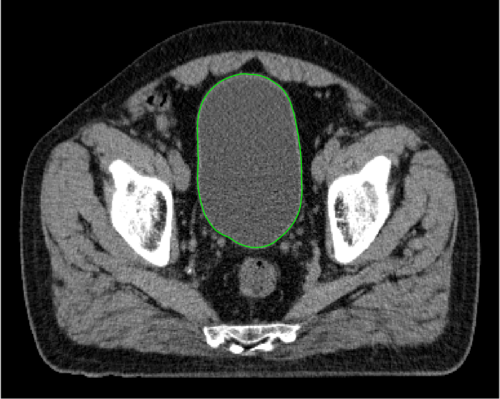
Giaccia continued, “I believe that automated contouring of organs at risk (OARs) using AI is revolutionizing the radiotherapy planning process. Not only can AI free up doctors’ time, which is a huge benefit for patients, but it may also enable better outcomes.
“This is not just about producing faster workflows, it’s also about the overall quality of treatment plans, as AI will be able to help identify normal tissue and preserve at risk tissue. This, in turn, will help deliver greater personalised care, while potentially contributing to improved outcomes.”
These milestone achievements track alongside a continually growing body of clinical evidence, produced in partnership with global academic medical partners, that underlines the real-word benefit obtained by clinics who have deployed the world-first deep learning autocontouring system, Mirada’s DLCExpert. In particular, multiple published clinical studies provide robust evidence which confirms that software generated contours, reviewed and refined by clinicians, represent a viable strategy for reducing contouring time while also reinforcing compliance with established clinical standards. Research published by the American Association of Physicists in medicine has indicated time savings of up to 77 percent for some organs, resulting from editing software generated contours compared to the standard clinical workflow.
Charlotte Brouwer, medical physicist at the Department of Radiation Oncology, University Medical Center Groningen, said: “The collaboration between UMC Groningen and Mirada Medical has produced autocontouring models that encode according to consensus guidelines, established by an international panel of experts for organs at risk. These DLCExpert models are now deployed in our routine clinical workflows, forming a key part of our treatment planning for all patients with cancers in the head and neck or prostate regions.
“Thanks to DLCExpert, we now enjoy measurable and consistent time-savings, which we expect to translate to other institutions," she continued. "Perhaps the clearest indications of their clinical acceptance were the loud objections of our RT planning team when the models were briefly unavailable during routine maintenance!”
Mirada Medical CEO Hugh Bettesworth said: “I am delighted that Mirada’s technology is being deployed so widely and that patients are benefitting from it every day. We hear a lot of talk about bringing artificial intelligence to medicine - I am immensely proud that it is Mirada’s brilliant team of scientists and engineers who have worked with our customers, our clinical advisors, and the regulators in the USA and Europe, and have delivered every-patient clinical advances for cancer treatment planning using artificial intelligence.”
For more information: www.axicom.com
Related content:
VIDEO: Artificial Intelligence Automatic Contouring and Segmentation For Radiotherapy
Mirada Medical Showcases DLCExpert AI-Based Radiotherapy Contouring Software at ASTRO 2018
 October 19, 2026