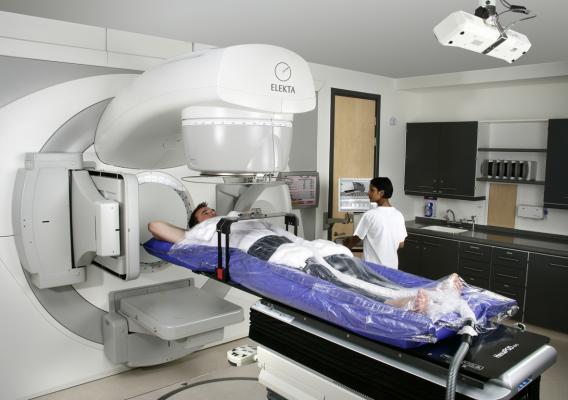
May 14, 2019 — Delivering just the right dose of radiation for cancer patients is a delicate balance in their treatment regime. However, in a new study from UBC Okanagan and Duke University, researchers have developed a system they say may improve the ability to maximize radiation doses to cancer tissues while minimizing exposure to healthy ones.
"Radiation is a significant part of cancer therapy and it's important to make it as effective as possible," said Andrew Jirasek, a UBC Okanagan physics professor and senior author of the study. "The challenge is that radiation, while great at attacking rapidly dividing cancer cells, is also damaging to the surrounding healthy cells. Our solution is to make it easier to see exactly which tissues are getting a radiation dose and how much."
The new system uses a specialized polymer gel used to assess both the 3-D location and the dose of the treatment. The team's first step was to validate the spatial accuracy of the gel, known as a dosimeter. They compared the dosimeter readings with traditional radiation treatment planning algorithms and found that the gel dosimeter was accurate in mapping the spatial location of the delivered radiation. Measurements of the radiation dose were also validated and visualized with the dosimeter.
The new system also allows for direct visualization of the radiation dose immediately after therapy, which results in highly efficient and accurate testing.
"Advances in delivery technology have enabled radiation beams to be rotated and adjusted to target the tumour and spare the healthy tissue, which reduces side effects," Jirasek added. "Now more advanced measuring devices are required to ensure that the dose and delivery of the treatment is accurate."
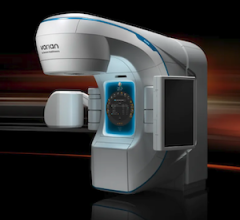
Jirasek worked with colleagues from Duke University to take advantage of positioning systems already in place on most linear accelerators that deliver a radiation beam to the patient. The advantage of using the existing systems allowed for a new adjustment to be implemented without significant changes to the equipment.
"For the first time we are able to visualize a radiotherapy dose in true 3-D and very quickly after the radiation has been delivered," said Jirasek.
More than 50 percent of all cancer patients benefit from radiation therapy as it helps manage their disease. However, because radiation affects both healthy and tumor tissue, accurate and tightly controlled dosing is crucial. This new system may lead to improvements in dose accuracy, sensitivity and localization during therapy.
"The next steps are to improve the process so that it can move into the clinic — the sooner successful therapy is implemented, the better for the patient," Jirasek added.
Supported by a Natural Sciences and Engineering Research Council of Canada grant, this research was published in the International Journal of Radiation Oncology, Biology, and Physics.
For more information: www.redjournal.org
Reference
1. Adamson J., Carroll J., Trager M., et al. Delivered Dose Distribution Visualized Directly With Onboard kV-CBCT: Proof of Principle. International Journal of Radiation Oncology, Biology and Physics, published online Dec. 19, 2018. DOI: https://doi.org/10.1016/j.ijrobp.2018.12.023
 October 07, 2026