October 25, 2017 — ViewRay Inc. announced outcomes data presented during the recent 2017 Annual Meeting of the American Society for Radiation Oncology (ASTRO), Sept. 24-27 in San Diego. This data highlighted compelling early results using the company's magnetic resonance imaging (MRI)-guided MRIdian radiation therapy system for the treatment of inoperable, locally advanced pancreatic cancer.
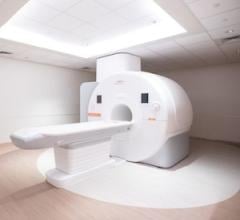
MRIdian allows clinicians to see the tumor and nearby soft-tissue anatomy throughout radiation treatments using real-time diagnostic MR-visualization. As a result, MRIdian's on-table adaptive radiation therapy allows doctors to respond to subtle anatomical changes observed on a day-to-day basis and reshape the dose to better match the current contours of the tumor. By more accurately targeting the tumor, and reducing treatment radiation dose to surrounding organs such as the duodenum, small bowel, stomach and liver, a higher and potentially more effective radiation dose may be delivered without increasing the risks of side effects and complications for the patient.
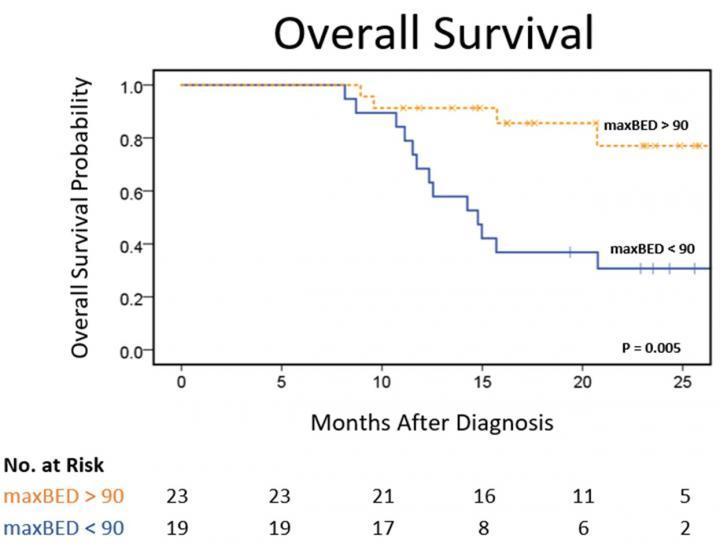
As featured in the ASTRO Scientific Session poster titled "High Dose Adaptive MRI Guided Radiation Therapy Improves Overall Survival of Inoperable Pancreatic Cancer," key data points and findings from the presentation include the following:
- The study detailed a retrospective review of 42 locally-advanced pancreatic cancer patients treated with MRIdian at four institutions (University of California Los Angeles, University of Wisconsin, VU University Medical Center, Washington University);
- The authors examined survival and toxicity rates for two unique cohorts of patients. One sample received a higher biologically effective dose (maxBED10 >90), primarily enabled by MRIdian MR-guided on-table adaptive radiotherapy. The other sample received a lower, more conventional biologically effective dose (maxBED10 <90), using non-adaptive therapy;
- The cohort receiving a higher dose demonstrated a near doubling of median overall survival (Kaplan-Meier estimated median overall survival of 27.8 months compared to 14.8 months); and
- Patients treated with higher radiation doses reported no grade 3 or higher toxicities (0 percent). In comparison, those patients receiving lower doses via non-adaptive treatments experienced 15.8 percent grade 3 or higher toxicities.
"High-definition MR now enables oncologists to detect the slightest anatomical changes that occur from one day to the next and in real-time while the patient is being treated. Coupled with new adaptive radiation therapy software tools, we create new customized plans in minutes, all while the patient is on the treatment table," said Percy Lee, M.D., senior author and associate professor and vice chair of education for the Department of Radiation Oncology at the David Geffen School of Medicine at UCLA. "The data presented at the 2017 ASTRO Annual Meeting suggests that higher radiation doses with adaptive MR guided radiation therapy may improve survival in pancreatic cancer while maintaining a very favorable toxicity profile. These outcomes warrant further investigations."
The early results highlighted above, along with other data obtained using MRIdian, will be tested in a multi-center, prospective, single-arm clinical trial for inoperable, locally advanced or borderline resectable pancreatic cancer. The trial will be conducted by ViewRay's Clinical Cooperative Think Tank (C2T2), a group of MRIdian medical institutions focused on evidence gathering to support MR-guided radiation therapy.
For more information: www.viewray.com
Related MRI-Guided Radiotherapy Content
WEBINAR: Pancreatic Cancer Outcome Highlights via On-table Adaptive MR-guided Radiation

 October 13, 2026