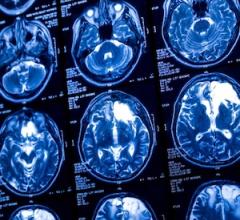
August 15, 2017 — The International Society for Magnetic Resonance in Medicine (ISMRM) has provided new guidance in the use of contrast agents during MRI scans. Emerging research suggests gadolinium-based contrast agents, injected in a patient's veins to brighten tissues in MRI images, accumulate in the brain. More than 300 million doses of such drugs have been administered since their introduction in 1987.
"Small amounts of gadolinium deposit in certain parts of the brain in people who undergo repeated gadolinium-based contrast agent enhanced exams," said Vikas Gulani, M.D., Ph.D., associate professor of radiology, urology and biomedical engineering at Case Western Reserve University School of Medicine, member of the Case Comprehensive Cancer Center, and director of magnetic resonance imaging at University Hospitals Cleveland Medical Center. "The ISMRM response is a review of the literature and a series of recommendations on what the community ought to do in response to this phenomenon." Gulani helped craft the new recommendations and served as first author for the review, featured on the cover of The Lancet Neurology.
In the review, Gulani and other experts suggest if gadolinium is not needed for a particular exam, it should not be administered. A risk-benefit analysis should happen for all exams. "Nearly everyone needs an MRI scan at some point, often contrast enhanced," Gulani said. "The idea that some gadolinium could be depositing in the brain is disconcerting to patients. In that situation, putting the risk and benefits into context is important." If gadolinium is needed, it should be administered and the choice of agent is dependent on a large number of factors, only one of which is the deposition phenomenon.
Defining harm is an important consideration. Gadolinium-based contrast agents have a proven track record for accurate diagnosis and treatment monitoring of a large number of diseases including cancer, neurological pathology, heart disease, liver disease, and many other important conditions afflicting adults and children. They are associated with few side effects, the most serious of which are extremely infrequent and affect already sick patients with severe kidney failure. The new review does not suggest sweeping changes in the use of MRI contrast agents, as at present, there is no evidence linking the brain deposits to health risks. However, it provides clarity about the previously unknown phenomenon of gadolinium deposition in the brain and provides guidance for future research.
For more information: www.thelancet.com/neurology

 October 07, 2026