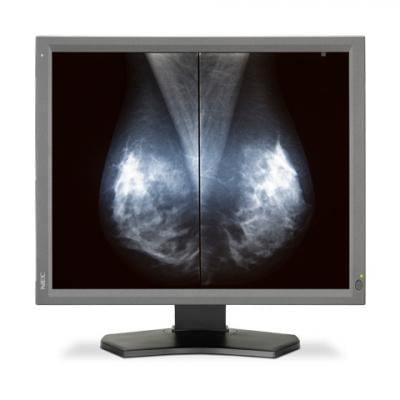
January 27, 2017 — Market intelligence firm Infiniti Research released a new report on the growth of 3-D mammography (tomosynthesis) in the United States, highlighting the benefits and acknowledging the barriers to continued adoption.
The following are excerpts from the report:
Mammograms are an essential part of breast cancer detection, and accuracy is vital. While 2-D technology is still frequently used for this process, there now exists a better, more accurate option in 3-D mammography, also known as tomosynthesis.
3-D Mammogram Technology
Innovations in medical imaging technology continue to improve cancer detection, and 3-D mammography is among them. As with its 2-D counterpart, the 3-D machine still needs to compress the breast to take a reading. But instead of remaining stationary, it rotates through an arc, taking multiple images to create a three-dimensional image of the breast. This allows it to deliver clearer and more accurate results than its predecessor. It provides a clearer image of the breast tissue, and is better able to view dense tissue, thereby reducing false positives and false negatives. This technology has increased early breast cancer detections by at least 40 percent, making the cancer easier to treat and eliminate.
Health Insurance: Setbacks and Opportunities
Despite all of the benefits of these machines, many people have been unable to take advantage of them. In the United States, for example, many health insurance companies will not cover procedures that use this new technology, despite it often being more effective. While Medicare and Medicaid do cover it, private insurers do not. Patients can therefore be forced to settle for a 2-D mammogram even when it is not the best option.
This is changing in at least one state, however. Connecticut has brought in a new law this year that requires insurers to cover 3-D mammograms if the patient asks for them. While the state’s Insurance Department argues that this will be very costly to implement, supporters of the law disagree. Although the initial cost of acquiring new equipment will be high, the accuracy of these tests will eliminate the need for many 2-D tests. The costs should also fall as the equipment and tests become more prevalent.
For more information: www.infinitiresearch.com
 October 09, 2026