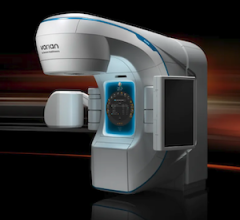
October 25, 2016 — Stereotactic body radiation therapy (SBRT) is a specialized and highly targeted method of delivering radiotherapy, or radiation therapy, to treat cancer. This approach, used to treat many solid-tumor cancers, including lung, liver and kidney cancers, can mean greater convenience and quality of life for patients because it involves fewer individual treatments and can help to spare healthy tissue. A new study led by Anurag Singh, M.D., of Roswell Park Cancer Institute presented at the American Society for Radiation Oncology (ASTRO) 2016 Annual Meeting suggests that a single high-intensity SBRT dose can be as effective as three slightly lower doses of radiation.
Working with colleagues from Roswell Park as well as collaborators from the Cleveland Clinic and Upstate New York Medical University, Singh undertook a phase II clinical study involving nearly 100 patients treated for early-stage non-small-cell lung cancer (NSCLC) between 2008 and 2015. The patients were randomly assigned to be treated through one of two established stereotactic radiation regimens: either a single dose of 30 grays (Gy) of radiation or 60 Gy delivered through three 20-Gy doses.
They found that the one-dose regimen — which cut patients’ total radiation exposure in half — was at least as effective as the three-dose schedule. Overall and progression-free survival improved modestly for patients treated with a single 30-Gy dose. Additionally, fewer patients treated with a single dose of radiation experienced significant (grade 3-5) side effects.
“Our goal is always to right-size treatment, and we’re especially excited any time we can show that less treatment can be at least as effective as a more intense regimen, maybe even more so,” said Singh, professor of oncology and director of radiation research in the Department of Radiation Medicine at Roswell Park. “Our findings were surprising, because we previously thought that you would sacrifice some measure of efficacy by reducing radiation exposure to this extent. So we were thrilled that that is not the case.”
“There are a lot of important implications here, in terms of patient convenience and quality of life — especially for those who don’t live close to a cancer center — and the ability to combine radiation therapy with immunotherapy or surgery,” added Singh, who is currently leading or planning similar studies in other cancer disease sites.
This research was first presented by Gregory Videtic, M.D., of the Cleveland Clinic in a Sept. 25 talk at the ASTRO 2016 Annual Meeting in Boston.
For more information: www.astro.org

 October 13, 2026