News | Cardiac Imaging | May 10, 2016

Study of 752 patients finds cardiac magnetic resonance better predicts risk at five year follow-up

cardiac magnetic resonance, CMR, SPECT, major adverse cardiovascular events, MACE predictor, Annals of Internal Medicine study

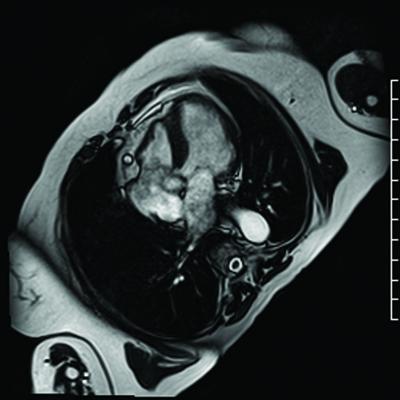
May 10, 2016 — Cardiovascular magnetic resonance (CMR) is a stronger predictor of risk for major adverse cardiovascular events (MACE) than single-photon emission computed tomography (SPECT) at five years follow-up. The findings are published in Annals of Internal Medicine.

CMR is an MRI scan that focuses on the area around the heart. Unlike SPECT, CMR does not involve ionizing radiation and the large CE-MARC (Clinical Evaluation of Magnetic Resonance imaging in Coronary heart disease) study demonstrated that CMR had high diagnostic accuracy, with higher sensitivity and negative predictive value compared with SPECT.

However, data on the prognostic value of CMR remain limited. A predefined objective of CE-MARC was to assess the ability of CMR and SPECT to predict MACE at five-year follow-up. To do so, researchers studied 752 patients from the CE-MARC study who were being investigated for suspected coronary heart disease. The patients were scheduled to undergo CMR and SPECT in random order, followed by X-ray coronary angiography (the reference standard) within four weeks. The investigators followed up with patients every year for five years to assess for MACE.

The researchers found that at five-year follow-up, CMR was a stronger predictor of risk for MACE than SPECT, independent of clinical cardiovascular risk factors, angiography result or initial patient treatment. The researchers conclude that CMR should be considered a robust alternative to SPECT for the diagnosis and management of patients with suspected coronary heart disease.

For more information: www.annals.org


Related Content

News | Radiopharmaceuticals and Tracers

Aug. 30, 2026 — Bayer has announced the presentation of first detailed results from the Phase III REVEAL study, an ...

Time September 02, 2026
arrow
News | Radiology Imaging

Sept. 1, 2026— A new study from the Harvey L. Neiman Health Policy Institute found that the odds of imaging following an ...

Time September 01, 2026
arrow
News | RSNA

Aug. 18, 2026 —The board of trustees of the Radiological Society of North America's (RSNA) Research & Education (R&E) ...

Time August 24, 2026
arrow
News | Radiology Imaging

Aug. 13, 2026 — Epic's new Care Everywhere Diagnostic Image Exchange allows health systems using Epic to share ...

Time August 21, 2026
arrow
News | Cardiac Imaging

Aug. 20, 2026 – The novel, radiopaque, polymer-based embolic coil from Embolization, Inc. has now surpassed 125 implants ...

Time August 20, 2026
arrow
News | Radiology Business

Aug. 4, 2026 — Canon Medical Systems USA (CMSU) has appointed Tsuneo "Neo" Imai as president and chief executive officer ...

Time August 10, 2026
arrow
News | Radiology Imaging

Aug. 4, 2026 — A new study from the Harvey L. Neiman Health Policy Institute found that the time between an imaging scan ...

Time August 06, 2026
arrow
News | Contrast Agents

Aug. 5, 2026 — Bracco Group is bringing a newly authorized macrocyclic gadolinium-based contrast agent (GBCA) for ...

Time August 05, 2026
arrow
News | Computed Tomography (CT)

July 23, 2026 — HOPPR has introduced HOPPR EF Chest CT Narrative Model, a foundation model that processes 3D chest CT ...

Time July 27, 2026
arrow
News | Point-of-Care Ultrasound (POCUS)

July 21, 2026 — Fujifilm Sonosite has launched Sonosite iLOOK, a compact ultrasound solution designed specifically for ...

Time July 22, 2026
arrow
Subscribe Now