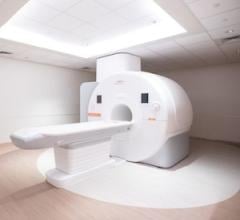
Regions of the brain function differently among people with post-traumatic stress disorder, causing them to generalize non-threatening events as if they were the original trauma, according to new research from Duke Medicine and the Durham VA Medical Center.
Using functional MRI, the researchers detected unusual activity in several regions of the brain when people with PTSD were shown images that were only vaguely similar to the trauma underlying the disorder. The findings, reported in the Dec. 15, 2015, issue of the journal Translational Psychiatry, suggest that exposure-based PTSD treatment strategies might be improved by focusing on tangential triggers to the initial event.
“We know that PTSD patients tend to generalize their fear in response to cues that merely resemble the feared object but are still distinct from it,” said Rajendra A. Morey, M.D., an associate professor in the Department of Psychiatry and Behavioral Sciences at Duke and director of the Neuroimaging Lab at the Durham VA Medical Center. “This generalization process leads to a proliferation of symptoms over time as patients generalize to a variety of new triggers. Our research maps this in the brain, identifying the regions of the brain involved with these behavioral changes.”
Morey and colleagues enrolled 67 military veterans who had been deployed to conflict zones in Iraq or Afghanistan after Sept. 11, 2001, and who had been involved in traumatic events. Thirty-two were diagnosed with PTSD and 35 did not have the disorder.
All patients were showed a series of five facial images, depicting a range of emotions from neutral to frightened, while undergoing a functional MRI. The scans showed no dissimilarities between those with PTSD and those unaffected.
Outside the MRI, the participants were shown the images again and given a mild electrical shock when viewing the middle image – the face showing moderate fear.
The patients then underwent another MRI scan as they viewed all five faces. People with PTSD showed heightened brain activity when they saw the most fearful face and associated it with the electric shock, even though they had actually experienced shocks when the middle, less fearful face appeared. Brain activity was heightened for the non-PTSD group when participants saw the correctly associated middle face.
“The PTSD patients remembered incorrectly and generalized their anxiety to the image showing the most fearful expression,” Morey said. “This phenomenon was captured in MRI scans, showing where the PTSD group had heightened activity.
“The amygdala, which is an important region in responding to threat, did not show a bias in activation to any particular face,” Morey said. “But there was a definite bias of heightened activity in response to the most frightened expression in brain regions such as the fusiform gyrus, insula, primary visual cortex, locus coeruleus and thalamus.”
Morey said the visual cortex was significant because it is not only doing visual processing, but also assessing threats. He said the locus coeruleus is responsible for triggering the release of adrenaline during stress or serious threat.
These functional brain differences provide a neurobiological model for fear generalization in which PTSD symptoms are triggered by things that merely resemble the source of original trauma.
“People with posttraumatic stress disorder grow anxious based on reminders of past trauma, and generalize that fear to a variety of triggers that resemble the initial trauma,” Morey said. “Current fear conditioning therapies are limited by repeated use of the same cue to trigger the initial trauma, but they might be enhanced by including cues that resemble, but are not identical to, cues in the original trauma.”
In addition to Morey, study authors included Joseph E. Dunsmoor; Courtney C. Haswell; Vanessa M. Brown; Avani Vora; Jonathan Weiner; Daniel Stjepanovic;
Ryan Wagner III; Kevin S. LaBar; and the VA Mid-Atlantic MIRECC Workgroup.
This research received financial support from the Veterans Health Affairs and the National Institute of Neurological Disorders And Stroke of the National Institutes of Health.
For more information: www.dukemedicine.org

 October 07, 2026