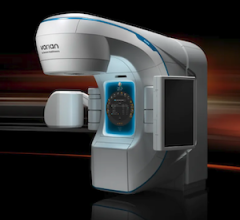
December 11, 2014 — Analysis of data from an institutional patient registry on stereotactic body radiotherapy (SBRT) indicates excellent long-term local control on 79 percent of tumors for medically inoperable, early stage lung cancer patients treated with SBRT from 2003 to 2012. The research was presented at the 2014 Chicago Multidisciplinary Symposium in Thoracic Oncology.
The 300 patients in the study had 340 lesions (tumors) and were treated from Oct. 1, 2003, through Dec. 31, 2012, at the Cleveland Clinic. Patients in the study had a median age of 74 years (range = 37-97 years), a median Karnofsky Performance Status (KPS) of 80 (range = 40-100), and were not candidates for surgery because of associated medical conditions, of which chronic obstructive pulmonary disease (COPD) was the most common (62 percent). Median follow-up was 17.4 months (range = 0.3-112.2 months), with 46.7 percent (140) of patients alive at the time of follow-up. Median tumor diameter was 2.4 cm (range 0.1-10 cm), and 36.3 percent of tumors (123) had either no biopsy or a non-diagnostic biopsy. Fifteen percent of patients (45) received two or more SBRT treatments.
SBRT for lung cancer necessitates accurate and custom mapping of each individual patient’s anatomy and a way of accounting for breathing motion to optimally target tumors while sparing as much of the surrounding healthy tissue as possible. In this study, all patients were uniformly treated using a vacuum-bag immobilization system and abdominal compression to limit breathing effects. Then, computed tomography (CT) images were acquired to record tumor motion when at rest, full inhalation and full exhalation. These three images merged together generated the internal target volume (ITV) of the tumors, essentially representing a virtual map of tumor motion. Radiation doses were calculated to deliver ?95 percent of the planning target volume (PTV), defined as the ITV + 5mm “safety” margin. All patients received 50 Gy in five fractions delivered during one week by 7-9 highly targeted radiation beams.
Early and late toxicity, as defined by the Common Terminology Criteria for Adverse Events (CTCAE) version 3.0 was measured for all patients. The overall rate of any toxicity was 13.0 percent (45), with most patients having minimal toxicities (grade 2 or less) and no grade 4 or 5 toxicity events were recorded. The most common occurrences were chest wall toxicity, 7.7 percent, and pneumonitis (inflammation of the lung tissue), 4.1 percent. The toxicity rate for the 115 lesions classified as “central” tumors, according to the RTOG 0813 definition of “within or touching the zone of the proximal bronchial tree or adjacent to mediastinal or pericardial pleura,” vs. non-central tumors (225 lesions) was 15.5 percent (18 lesions) vs. 11.7 percent (27 lesions).
At five years post-treatment, local control was 79 percent vs. 75.4 percent for patients with central tumors vs. non-central tumors, respectively. The distant metastases-free and disease failure-free rates were 49.5 percent vs. 56.7 percent, and 37.3 percent vs. 34.3 percent, respectively. Overall survival was 18.3 percent vs. 20.3 percent, respectively. The failure rates of the central vs. non-central tumors utilizing all parameters had no statistically significant differences. Rates of local, lobar (within a whole lobe of the lung) and regional node failure for lesions were 11.2 percent, 4.1 percent and 13.5 percent, respectively.
For more information: www.astro.org

 October 01, 2026