August 18, 2014 — Two Mount Sinai research studies in the August issue of the Journal of the American College of Cardiology (ACC): Cardiovascular Imaging show the potential of using tele-robotic medicine when diagnosing heart failure patients.
While in Germany, Partho P. Sengupta, M.D., Icahn School of Medicine at Mount Sinai, used a computer to perform a robot-assisted trans-Atlantic ultrasound examination on a person in Boston. In another study, Kurt Boman, M.D., Umeå University, Sweden, in collaboration with Mount Sinai, showed how a cardiologist’s video e-consultation, coupled with a remote robot-assisted echocardiogram test, dramatically reduces the waiting time for a diagnosis faced by heart failure patients who live in rural communities far from the hospital from nearly four months to less than one month.
“The two studies give us a glimpse of what to expect in the near future, a patient-friendly imaging technology at your doorstep,” said Jagat Narula, M.D., Ph.D., senior author of both research studies who serves as director of the Cardiovascular Imaging Center and associate dean of Global Research at Icahn School of Medicine at Mount Sinai.
“These studies lift the robotic imaging and telemedicine to the next level,” said Sherif F. Nagueh, M.D., medical director of the Echocardiography Laboratory at the Methodist DeBakey Heart and Vascular Center in Houston, who authored the accompanying editorial about the two studies in JACC: Cardiovascular Imaging.
“Our first-in-man experiment shows long-distance, tele-robotic ultrasound examinations over standard Internet are possible,” said Sengupta, who is director of cardiac ultrasound research at Icahn School of Medicine at Mount Sinai and chair of the New Technology Task Force at the American Society of Echocardiography (ASE). “Our successful experiment opens up a new frontier for the use of remote, robotic ultrasound imaging that could potentially be more efficient and cost-effective overall for healthcare access and delivery.”
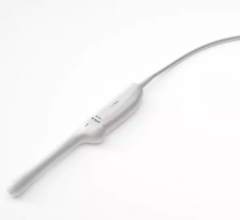
In the first study, principal investigator Sengupta and researchers tested the use of a small, lightweight robotic arm with built-in ultrasound technology stationed in Boston and connected to a personal computer with low-bandwidth Internet connection in Munich, Germany. The robotic ultrasound exam of a person’s carotid artery in their neck was completed in just four minutes.
“This feasibility and time efficiency of long-distance, tele-robotic ultrasound may help expand the role of imagers to care for patients online virtually, lending a true ‘helping hand’ remotely and providing a patient’s care team expert guidance,” said Sengupta. Interestingly, in the study experiments both advanced experts and early trainees on robotic ultrasound were able to operate the tele-robotic technology.
In the second study, Boman and colleagues randomized half their study patients to remote consultation and the other half to standard of care referral to the hospital. Remote consultation and the robotic echocardiogram exam were conducted on the same day of a patient’s visit to their local primary healthcare center, located more than 100 miles away from the hospital. Study results show the total diagnostic process time was significantly reduced from 114 to 27 days in those patients receiving remote consultation. Also, the patient’s wait time until obtaining a specialist consultation was reduced from 86 to 12 days, with 95 percent of remote consult patients claiming remote consult to be a superior strategy.
“As a result of our pilot study, we were able to establish a safe and efficient e-health solution to improve the comprehensive, convenient examination of suspected heart failure patients in a rural community of northern Sweden and improve their physician care team’s communication,” said Narula. “This pilot study may serve as a future model for use of e-consults and robotic imaging in similar rural communities to improve access to specialists and the latest diagnostic technology globally.”
“In clinical medicine, the use of more portable, low-cost, safe, non-radiation using ultrasound imaging technology is growing for diagnosis, patient monitoring, and procedural and surgical planning,” said Valentin Fuster, M.D., Ph.D., director of Mount Sinai Heart at Icahn School of Medicine at Mount Sinai and the new editor-in-chief of JACC. “The technology may be key to accelerating greater local and global healthcare access more efficiently and cost-effectively for patients, doctors, communities and hospitals in need.”
According to researchers, on-demand, virtual robotic ultrasound could be used in a wide variety of clinical setting collaborations, ranging from timely in-hospital or emergency room patient imaging studies, community screenings or even within dangerous locations such as war zones.
For more information: www.mountsinai.org

 October 01, 2026