April 25, 2014 — New findings from a clinical study of 12 astronauts show the heart becomes more spherical when exposed to long periods of microgravity in space, a change that could lead to cardiac problems, according to research to be presented at the American College of Cardiology’s 63rd Annual Scientific Session.
With implications for an eventual manned mission to Mars, the findings represent an important step toward understanding how a spaceflight of 18 months or more could affect astronauts’ heart health.
“The heart doesn’t work as hard in space, which can cause a loss of muscle mass,” said James Thomas, M.D., Moore Chair of cardiovascular imaging and lead scientist for ultrasound at NASA, and senior author of the study. “That can have serious consequences after the return to Earth, so we’re looking into whether there are measures that can be taken to prevent or counteract that loss.”
The researchers say that knowing the amount and type of exercise astronauts need to perform to keep the heart healthy is going to be very important to guarantee their safety on a long flight like a mission to Mars. Thomas added that exercise regimens developed for astronauts could also be used to help maintain heart health in people on Earth who have severe physical limitations, such as people on extended bed rest or those with heart failure regime.
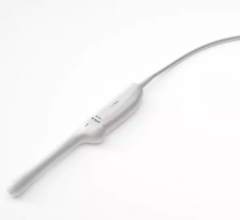
The research team trained astronauts to take images of their hearts using ultrasound machines installed on the International Space Station. Twelve astronauts participated, providing data on heart shape before, during and after spaceflight.
The results show the heart in space becomes more spherical by a factor of 9.4 percent, a transformation similar to what scientists had predicted with sophisticated mathematical models developed for the project. By validating those models, the study could also lead to a better understanding of common cardiovascular conditions in patients on Earth.
“The models predicted the changes we observed in the astronauts almost exactly. It gives us confidence that we can move ahead and start using these models for more clinically important applications on Earth, such as to predict what happens to the heart under different stresses,” Thomas said.
The team is now working to generalize the models to analyze such conditions as ischemic heart disease, hypertrophic cardiomyopathy and valvular heart disease.
“The models could help us simulate those pathologies to understand the impact on cardiac function,” Thomas said.
The astronauts’ more spherical heart shape appears to be temporary, with the heart returning to its normal elongated shape shortly after the return to Earth. The more spherical shape experienced in space may mean the heart is performing less efficiently, although the long-term health effects of the shape change are not known.
Spaceflight is known to cause a variety of cardiac effects. Upon return to Earth, astronauts commonly become lightheaded or pass out in a condition known as orthostatic hypotension, in which the body experiences a sudden drop in blood pressure when standing up. Arrhythmias have also been observed during space travel, and there is concern that the radiation astronauts are exposed to in space may accelerate atherosclerosis. The research team is continuing to examine these and other potential cardiovascular effects.
This study is funded by the National Space Biomedical Research Institute through NASA Cooperative Agreement NCC9-58.
For more information: www.CardioSource.org.

 October 07, 2026