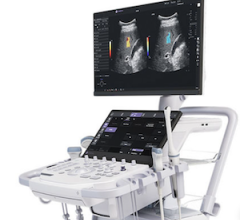
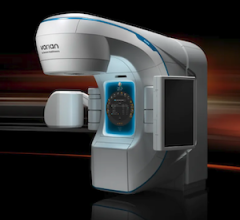
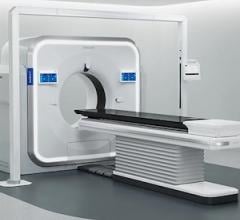
August 28, 2013 — Experts have found that radiation dosage can have serious complications for patients with cancer. Cancer patients who receive chest radiation should be evaluated for heart disease before beginning radiation, and every five to 10 years afterward, according to the American Society of Echocardiography (ASE) and the European Assn. of Cardiovascular Imaging (EACVI) of the European Society of Cardiology (ESC). This expert consensus statement on the use of imaging to detect radiation-induced heart disease (RIHD) will be published in the September issue of the Journal of the American Society of Echocardiography (JASE). The writing group was co-chaired by Vuyisile Nkomo, M.D., an echocardiographer from the renowned Mayo Clinic in Rochester, Minn.
When asked about the need for this expert consensus statement, Nkomo said, “In the past, patients received high doses of radiation to the chest to treat breast cancer or lymphoma or esophageal cancer, but without adequate shielding of the heart because we did not know that radiation exposure would lead to premature heart disease. Over the years, the medical community has learned that patients with prior radiation to the chest develop premature heart disease that can involve all structures of the heart, leading to coronary artery disease, myocardial disease, valve disease, conduction system disease and pericardial disease.”
Nkomo continued, “Now that heart disease is a known delayed complication of radiation therapy, the guidelines were written to draw attention to this issue of radiation-induced heart disease (RIHD). And, it is urgent to get this information out and into clinical practice because of the increasing number of cancer survivors who receive radiation therapy to the chest and neck. Echocardiographic screening without indication of cardiovascular disease should not be a common practice in the general patient population, but assessments should be incorporated routinely in the initial care and follow-up of these cancer patients.” This guideline makes recommendations regarding when and how to look for RIHD, and it highlights the complementary nature of the various imaging modalities.
RIHD is estimated to occur in 10-30 percent of patients who receive chest radiotherapy within five to 10 years post-treatment. Modern treatment regimens incorporate lower radiation doses and improved shielding of the heart, but heart disease can still occur. In fact, Nkomo noted, “the improved safety of current treatment therapies means that RIHD may develop at widely varying rates among different populations. Therefore, data demonstrating temporal changes in incidence of RIHD and outcomes in the contemporary era are still needed.”
The full guideline document will be available on the Journal of American Society of Echocardiography (JASE) website (www.onlinejase.com) on Sept. 3, and will be published in the September 2013 print issue.
For more information: www.asecho.org/guidelines

 October 27, 2026