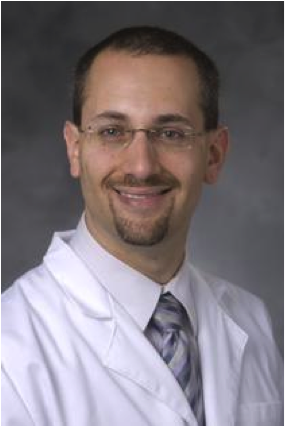
Mustafa Bashir, M.D., director of MRI at Duke University Medical Center
“In MR, time is coverage and resolution,” said Mustafa Bashir, M.D., director of MRI at Duke University Medical Center (DUMC) in Durham, N.C.. “Most patients can get through an 18 to 20 second breath hold but there is a large minority who can’t. And in a body MR exam, there are usually at least four or five breath holds that come in pretty rapid succession. Patients tend to fatigue over the course of an exam. So even good breath holders may move and you end up with a readable image but not a great image. This is a problem clinically, where subtle changes or small, new lesions can make a big difference in treatment.”
Eliminate Repeat Exams
The result? Body MR exams can require more departmental time and resources. For obese patients, the exams can take longer, and for patients who are unable to complete the breath holds, it may mean repeat exams, often with CT. Yet in some clinical cases, an MR exam would actually provide better clinical information — such as an magnetic resonance cholangiopancreatography (MRCP), which tends to be better at detecting subtle lesions than CT.
That’s one reason why radiologists at DUMC are using CAIPIRINHA, a unique parallel imaging acquisition technique that can be used with the 3D T1 VIBE or 3D Dixon technique. CAIPIRINHA can cut breath holds for 3D T1 exams in half without impacting image resolution, coverage or contrast.
Benefits for Elderly and Obese Patients
At DUMC, the technology has been particularly beneficial for 3D T1 imaging of elderly and obese patients. “There’s a minimum amount of fuzziness that we are willing to accept in our images. And in large patients, there’s a lot of territory to cover. So even if we had to have a certain amount of coverage and resolution, we ended up with really long scans. Even if a patient was a good breath holder, they often couldn’t get through the whole scan without moving.”
The majority of the body MR exams at DUMC are performed with contrast, which gives dynamic information about the vascularity of the organs, tumors, and different disease processes. The 3D T1 MR sequence is one of the most valuable sequences used in most applications. As a result, technologists at DUMC are benefitting from CAIPIRINHA in two main ways. “In arterial phase imaging, we do a multiphase acquisition so we get three scans in a row in one breath hold. In order to do that, we’ve historically had to reduce image resolution,” said Bashir. “With the high accelerate factors that CAIPIRINHA gives us, we can use a much higher resolution than we had previously. For non-arterial phases, we use the improved acceleration to provide the patient a much shorter, easier breath hold.”
Case: Breath Hold for 25-year-old Patient
“For other sequences where the resolution was already satisfactory, we use CAIPIRINHA for a shorter breath hold,” continued Bashir. “We are able to reduce breath holds from about 20 to 22 seconds down to 12 to 14 seconds. These shorter breath holds make for a much easier patient experience and tend to give us images that have less motion.”
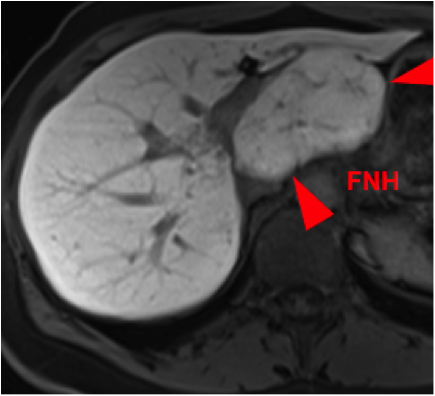
There are many cases that demonstrate the effectiveness of CAIPIRINHA and Bashir highlights one in particular: a 25-year-old woman initially evaluated for abdominal pain and diagnosed with focal nodular hyperplasia. “It’s considered reasonable to ask a patient for a 20-second breath hold. But you can see from the first image that the patient probably stopped holding her breath around 15 seconds. The image is readable but not that sharp,” he said. “The follow-up study one year later was done with CAIPIRINHA in about 12 seconds and is really, really sharp because it’s such an easy breath hold to do.”
Improve Satisfaction, Patients, Referrers, Staff
In addition, DUMC has experienced an increase in body MR imaging referrals. The medical center has 13 MRI scanners, performing both inpatient and outpatient exams. Bashir attributes the increase, in part, to the improvements in MR image quality his department has been able to achieve. “We’ve always been limited in MR by the image quality and the reproducibility of good quality exams,” he said. “When that becomes less of an issue, we do more body MR.”
Technologists at DUMC have likewise been impressed with the images they are able to obtain with CAIPIRINHA. “We did a software upgrade the other day and CAIPIRINHA wasn’t switched on yet on that system,” said Bashir. “I had a phone call within about two hours from the technologist asking why it wasn’t on the system and if I could work on getting it.”
Could CAIPIRINHA help your organization improve MR image quality? See the clinical differences and the impact this technology can have on avoiding unnecessary exams, reducing costs, and enhancing patient satisfaction: www.usa.siemens.com/bodymri


 October 07, 2026