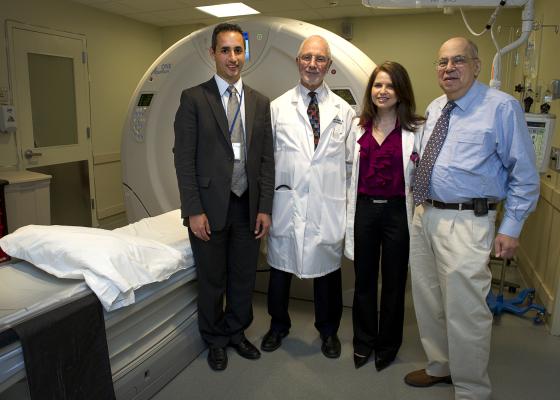
North Shore University Hospital unveils a new 640-slice CT scanner.
July 8, 2013 — North Shore University Hospital (NSUH) announced it has installed the most advanced cardiac computed tomography (CT) scanner to help diagnose heart disease and a patient’s risk for heart attack.
Developed by Toshiba Medical Systems, the Aquilion One Vision 640-slice CT scanner captures an image of the heart in less than one heartbeat — resulting in ultrafast scan times, superior three-dimensional images of the heart and significantly lower exposure to radiation compared with conventional scanners. The new CT scanner, which costs between $2.5 and 2.8 million, is one of only three in the United States — and the only one in the Northeast.
“The 640-slice CT’s high speed gives us the ability to capture a complete high-resolution image of the heart muscle in less than one-third of a second,” said Jesse Chusid, M.D., a cardiothoracic radiologist and chief of imaging informatics at NSUH. “In the past, cardiac scans required 10 phases of imaging to obtain an entire picture of a beating heart, compensating for movement. This new scanner allows us to evaluate the coronary arteries while delivering a lower dose of radiation to enhance patient safety.”
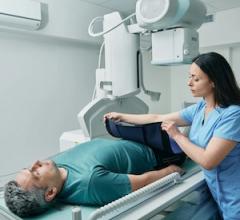
A cardiac CT combines X-rays and advanced computer technology to produce 3-D images of the beating heart. Using the 640-slice CT physicians are able to look at the heart’s structure, vessels and circulation to detect any coronary artery disease or defects in the heart.
According to the U.S. Centers for Disease Control and Prevention, heart disease is the leading cause of death in United States and soon projected to be the leading cause of death worldwide. It causes about 600,000 deaths in United States annually. Two thirds of those deaths are due to coronary artery disease.
“Cardiac CT is an excellent and useful diagnostic modality to rule out heart disease with 99 percent accuracy and avoid more invasive testing,” said Biana Trost, M.D., director of cardiac CT of the department of cardiology at NSUH. “If the images show a low degree of calcium in the heart arteries, patients can be started on preventive therapy. On the other hand, if the CT scans show a high risk of disease, which may lead to heart attack, patients can be referred for an angiogram and possible stenting or even surgery.”
James Naidich, M.D., a practicing radiologist at the hospital for 42 years, recently underwent a 640-slice CT scan and beat the odds of having a major heart attack, thanks to the new technology. Although Naidich had some risk factors for heart disease, the scan revealed that he had severe blockages in all three arteries of his heart, much to the surprise of his colleagues.
“The good news is that the proper diagnosis was made — almost by happenstance — and it provided the opportunity for me to get treated,” Naidich said.
This spring, Naidich underwent an angioplasty procedure to unblock arteries in the heart, using stents to restore blood flow. The procedure was performed by Naidich’s cardiologist, Stanley Katz, M.D., senior vice president of cardiovascular services at the North Shore-LIJ Health System.
“With the detailed 3-D images of the heart, we are able to look deep inside coronary arteries to detect evidence of disease and to identify any build up of calcium,” said Katz. “The CT images help cardiologists make a more accurate diagnosis and select the best course of treatment.”
A major advantage of the noninvasive 640-slice CT is that it can be used in the emergency room to rule out heart attacks and other problems in low- to moderate-risk patients with chest pain, often avoiding the need for patients to be admitted to the hospital. The Aquilion One Vision CT scanner can also be used for neurological studies.
For more information: www.medical.toshiba.com, www.northshorelij.com

 October 07, 2026