A new three-dimensional (3-D) digital mammography technique has the potential to significantly improve the accuracy of breast cancer screening, according to a study published in Radiology.
Two-dimensional (2-D) x-ray mammography, the current primary screening method for early detection of breast cancer in women, is a valuable tool but has some limitations. Surrounding normal tissue can mask lesions, and 2-D views do not provide direct information about the volumetric appearance—meaning the three-dimensional physical shape—of a detected lesion.
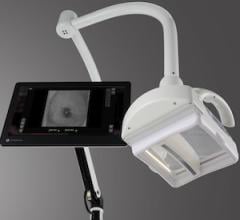
A novel technique called stereoscopic digital mammography (SDM) addresses these limitations by mimicking the way that human eyes work together to form a 3-D image. The technique uses digital mammography equipment that’s been modified to allow the X-ray tube to move separately from the cassette. The resulting images are viewed on two monitors mounted one above the other.
“Our eyes see the world from two slightly different perspectives,” said Carl J. D’Orsi, M.D., from the Department of Radiology and Imaging Sciences at Emory University School of Medicine and the Winship Cancer Institute at Emory University, both in Atlanta. “In this technique, the X-ray tube functions as the eyeball, with two different images providing slightly different views of the internal structure of the breast.”
By using a unique workstation and polarizing lenses, SDM has the ability to identify lesions at different depths within the breast volume, potentially reducing both false positive findings and recalls while enabling more accurate diagnosis.
D’Orsi and colleagues recently compared SDM to 2-D digital mammography in 779 patients at elevated risk of developing breast cancer because of personal or family history. Patients received both exams in a single visit, and two experienced radiologists independently interpreted the final total of 1,298 exams. Imaging findings were correlated with results of one-year follow up or biopsy.
SDM significantly improved the accuracy of cancer detection. The specificity of 91.2 percent was better than the 87.8 percent rate for 2-D digital mammography; and the accuracy of 90.9 percent, compared with 87.4 percent for 2-D digital mammography, was also a statistically significant improvement.
“We found that the stereoscopic technique could significantly decrease the need for calling women back for additional exams,” D’Orsi said.
D’Orsi and colleagues are expanding their research to study SDM with a lower radiation dose in the general screening population. The radiation dose used in the study was approximately double the standard dose for mammography.
“In this study, we used a high-risk population to get an adequate number of cancers, and we acquired each of the images comprising the stereo pairs with a full standard X-ray dose,” he said. “Now that we know the technique is worthwhile, we’re repeating the study in the general population with a dose comparable to routine screening mammography.”
“Stereoscopic Digital Mammography: Improved Specificity and Reduced Rate of Recall in a Prospective Clinical Trial.” Collaborating with Dr. D’Orsi were David J. Getty, Ph.D., Ronald M. Pickett, Ph.D., Ioannis Sechopoulos, Ph.D., Mary S. Newell, M.D., Kathleen R. Gundry, M.D., Sandra R. Bates, M.D., Robert M. Nishikawa, Ph.D., Edward A. Sickles, M.D., Andrew Karellas, Ph.D., and Ellen M. D’Orsi, R.T. (R)(M).
Radiology is edited by Herbert Y. Kressel, M.D., Harvard Medical School, Boston, Mass., and owned and published by the Radiological Society of North America, Inc. (http://radiology.rsna.org/)
RSNA is an association of more than 50,000 radiologists, radiation oncologists, medical physicists and related scientists, promoting excellence in patient care and health care delivery through education, research and technologic innovation. The Society is based in Oak Brook, Ill. For more information: www.radiologyinfo.org

 October 09, 2026