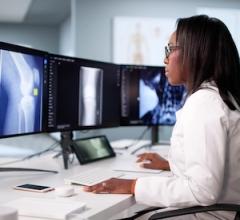
June 25, 2012 — Computed tomographic colonography (CTC), also known as virtual colonoscopy, administered without laxatives is as accurate as conventional colonoscopy in detecting clinically significant, potentially cancerous polyps, according to a study performed jointly at the San Francisco VA Medical Center (SFVAMC), the University of California, San Francisco, and Massachusetts General Hospital. The study was published in the May 15 issue of Annals of Internal Medicine.
“I think we have demonstrated that laxative-free CTC is a valid tool for detecting polyps that are clinically significant,” said co-author and site principal investigator Judy Yee, M.D., chief of radiology at SFVAMC and professor and vice chair of radiology at UCSF.
Virtual colonoscopy, which has been approved by the American Cancer Society as a valid screening test for colorectal cancer, uses a CT (computed tomography) scanner to screen for cancers and polyps in the colon noninvasively. In standard optical colonoscopy (OC), a physician inserts a six-foot-long scope into the entire colon. Currently, both methods call for patients to take a bowel-cleansing laxative before the procedure.
With laxative-free CTC, explained Yee, patients do not have to go through bowel cleansing before the exam, but instead begin a low fiber diet two days before the test. They also ingest a tagging agent the day before the exam, which mixes with residual material in the colon and can then be identified and removed digitally when radiologists interpret the scans.
“The use of laxatives is often viewed as the worse aspect of having not only a virtual colonoscopy but an optical colonoscopy,” said Yee, who has pioneered the use of virtual colonoscopy within the VA health care system and at UCSF. “I hope that this research will encourage patients who have delayed screening for colon cancer to be examined with this less invasive method.”
The study of 605 patients, aged 50 to 85, assessed the accuracy of laxative-free CTC in detecting lesions 6 mm or larger in size compared with standard optical colonoscopy. The authors found that laxative-free CTC exams detected clinically significant polyps 10 mm or larger with 91 percent accuracy compared to OC exams, which were 95 percent accurate. Statistically, there is no difference between these two numbers, said Yee.
Scan sensitivity using laxative-free CT colonography decreases with polyp size, as it does for regular CT colonography, she said. With polyps measuring 6 mm, sensitivity for CTC was 59 percent, compared with standard colonoscopy at 76 percent.
The smaller the polyp, the less likely it is to harbor malignancy. For diminutive polyps 5 mm or less, there is an extremely low risk of cancer, and these polyps may not need to be removed. For polyps between 6 and 9 mm in size, the decision about whether to remove them depends on the patient’s risk factors and how many are found, said Yee.
“Polyps 10 mm or larger unquestionably come out,” she said.
During the study, three of the 605 subjects were found to have cancerous polyps. The cancers were identified by both the laxative-free virtual colonoscopy and the standard OC exam. The researchers also surveyed the research participants about their experiences while preparing for the examinations. They found that laxative-free virtual colonoscopy scored higher on all survey questions, and was indicated by more participants to be their exam type of choice.
Yee noted that the current study is one of the first and largest to measure the effectiveness of the new, laxative-free procedure. Because the procedure is still in the early stages of development, additional studies still need to be conducted, she said.
She predicts that once radiologists are trained in reading the new images and gain experience with the exam process, laxative-free CTC exams will be available wherever virtual colonoscopies are performed.
For more information: www.ucsf.edu

 October 07, 2026