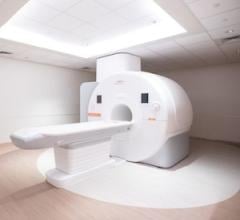
March 15, 2012 - Magnetic resonance imaging (MRI) of the eyes and brains of 27 astronauts who have spent prolonged periods of time in space revealed optical abnormalities similar to those that can occur in intracranial hypertension of unknown cause, a potentially serious condition in which pressure builds within the skull. A retrospective analysis of the MRI data appears online in the journal Radiology.
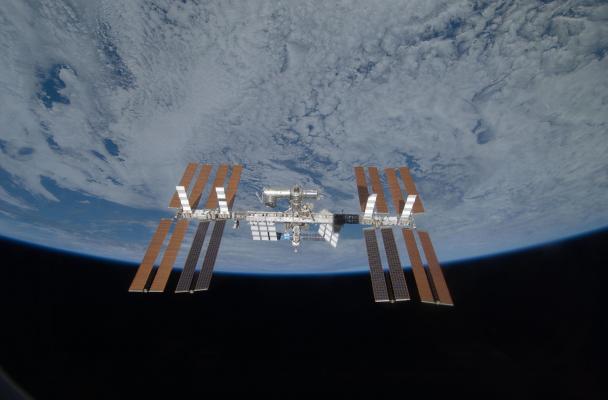
A team of researchers performed MRIs and analyzed the data on the 27 astronauts, each of whom were exposed to microgravity, or zero gravity, for an average of 108 days while on space shuttle missions and/or the International Space Station (ISS), a habitable research facility that has been orbiting the earth since 1998. Eight of the 27 astronauts underwent a second MRI exam after a second space mission that lasted an average of 39 days.
“The MRI findings revealed various combinations of abnormalities following both short- and long-term cumulative exposure to microgravity also seen with idiopathic intracranial hypertension,” said Larry A. Kramer, M.D., professor of diagnostic and interventional imaging at The University of Texas Medical School at Houston. “These changes that occur during exposure to microgravity may help scientists to better understand the mechanisms responsible for intracranial hypertension in non-space traveling patients.”
Among astronauts with more than 30 days of cumulative lifetime exposure to microgravity, findings included expansion of the cerebral spinal fluid space surrounding the optic nerve in nine of the 27 (33 percent) astronauts, flattening of the rear of the eyeball in six (22 percent), bulging of the optic nerve in four (15 percent) and changes in the pituitary gland and its connection to the brain in three (11 percent) of the astronauts. The pituitary gland secretes and stores hormones that regulate a variety of important body functions.
The same types of abnormalities are observed in cases of intracranial hypertension where no cause can be found for increased pressure around the brain. The pressure causes swelling of the juncture between the optic nerve and the eyeball, which can result in visual impairment.
Bone mineral loss and muscle atrophy are some of the known effects of zero gravity on astronauts. With the onset of longer excursions in space afforded by the ISS, visual changes have also been observed and are now being studied.
“Microgravity-induced intracranial hypertension represents a hypothetical risk factor and a potential limitation to long-duration space travel,” Kramer said.
William J. Tarver, M.D., M.P.H., chief of flight medicine clinic at NASA/Johnson Space Center, said the agency has noted changes in vision in some ISS astronauts, the origin of which is not yet fully understood. No astronauts have been considered ineligible for space flight duties as a result of the findings, which he said are suspicious but not conclusive of intracranial hypertension.
“NASA has placed this problem high on its list of human risks, has initiated a comprehensive program to study its mechanisms and implications, and will continue to closely monitor the situation,” Tarver said.
For more information: http://radiology.rsna.org

 October 07, 2026