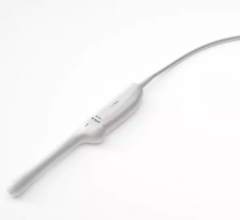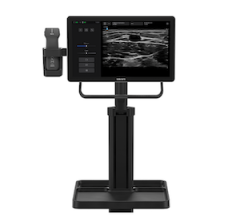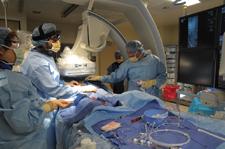
December 9, 2011 — The American Society of Echocardiography (ASE) and the Society of Cardiovascular Anesthesiologists (SCA) have released a new performance guideline for heightening the use of ultrasound in guided vascular cannulation. The process involves the insertion of a catheter, or tube, into a major vein or artery. The guideline also contains recommendations on training for these life-saving procedures.
The document recognizes and promotes the use of ultrasound technology to place catheters into major veins and arteries through visualization of these vessels beneath the skin. The guidelines follow the recommendations of the Agency for Healthcare Research and Quality (AHRQ) in their 2001 report: Making Health Care Safer: A Critical Analysis of Patient Safety Practices. The report recommended the use of ultrasound for the placement of all catheters in major veins as one of 11 recommended practices aimed at improving patient care.
“These guidelines promote patient safety by recommending ultrasound guidance as the preferred method for vascular access that is necessary for the administration of certain medications or monitoring heart function. This is especially true for catheters placed in the neck of adult patients and in the neck and groin of infants and children,” explained Kathryn Glas, M.D., FASE, MBA, associate professor of anesthesiology at the Emory University School of Medicine in Atlanta, Ga. Glas is also a member of the ASE writing group and former chair of ASE’s Council on Intraoperative Echocardiography.
Comprehensive practice guidelines and recommendations are made on the use of ultrasound to place catheters into the internal jugular veins; these veins carry deoxygenated blood from the head to the heart, subclavian veins in the upper chest, and femoral veins in the thigh. The guidelines work on the basis of the strength of the scientific evidence currently present in the literature.
The role of ultrasound for placing large catheters into infants and children is discussed specifically, along with the use of ultrasound for placing catheters into arteries and peripheral veins. Recommendations are made for training clinicians on incorporation of ultrasound into their practice, including the role of simulation.
Christopher Troianos, M.D., professor and chair of anesthesiology at The Western Pennsylvania Hospital in Pittsburgh, Pa., was the lead author on the document; it is titled “Guidelines for Performing Ultrasound Guided Vascular Cannulation: Recommendations of the American Society of Echocardiography and the Society of Cardiovascular Anesthesiologists.”
“Millions of central venous catheters are inserted annually in the U.S. alone. Although there are inherent risks associated with central venous cannulation, for many years I have seen first-hand the benefits of using ultrasound in improving success and reducing complications. I am thankful that the ASE and SCA have supported the creation of this important document that will inform and educate many clinicians towards improving patient safety,” Troianos explained.
ASE was represented in the writing group by members of its councils on intraoperative echocardiography and vascular ultrasound. The guideline will appear in the December 2011 issue of The Journal of the American Society of Echocardiography (JASE), and the SCA’s journal, Anesthesia & Analgesia (A&A). It is also available on the society’s website.
For more information: www.asecho.org

 October 07, 2026