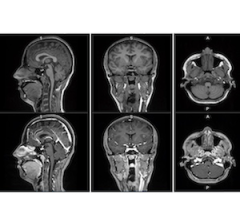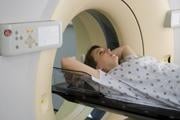
November 17, 2011 — Westside Medical Imaging of Beverly Hills announces the availability of high resolution magnetic resonance imaging (MRI) with a 3 Tesla magnet to monitor the effects of cholesterol drugs on atherosclerosis.
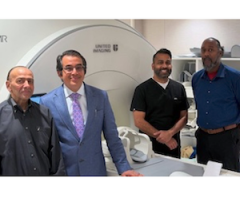
Norman Lepor, M.D., Hooman Madyoon, M.D., and Michael Duffy, M.D., of Westside Medical Associates of Los Angeles (WMALA) have adopted 3 Tesla MRI using specialized vascular coils to monitor cholesterol drug performance; they do this by following carotid plaque volume and morphology.
According to Lepor, who has reviewed this issue for the upcoming edition of Reviews in Cardiovascular Medicine, "MRI of plaques with a 3 Tesla magnet represents a pivotal development in vascular medicine. It enhances our capability to identify atherosclerotic plaques with a greater degree of sensitivity then carotid intima-media thickness (cIMT) and follow the effects of medical treatments with more accuracy."
Binh Phan, M.D., co-author of this study, found intensive treatment with cholesterol drugs reduced the amount of cholesterol in artery-clogging plaque in 120 patients randomly assigned to receive one of three cholesterol treatments: Lipitor; Lipitor plus Niaspan; or Lipitor plus Niaspan and colesevelam. After three years, the volume of cholesterol decreased from 60.4 cubic mm2 to 37.4 mm2. The percentage of plaque volume consisting of cholesterol decreased from 14.2 percent to 7.4 percent.
According to Madyoon, "because atherosclerosis occurs in blood vessels throughout the body, plaque build-up in carotid arteries is a good surrogate marker for build-up in the coronary arteries indicating a higher risk of heart attack and stroke."
Men over the age of 40 and women approaching menopause with a history of hypertension, elevated cholesterol, diabetes, smoking history or family history of heart disease should consider this exam.
These findings confirmed the theory that cholesterol medications lead to plaque regression by lowering cholesterol levels. According to Lepor, "this MRI technology will also allow physicians to individualize cholesterol therapy rather then treat everyone the same."
According to Duffy, "one of the key advantages of this technology is that you can assess the carotid arteries for plaque progression or regression serially over time since it does not expose the patient to any ionizing radiation."
For more information: www.westsidemedimaging.com
 June 12, 2026