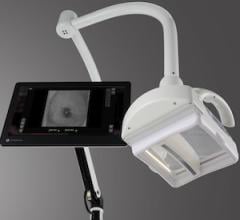
May 5, 2011 – Women in the United States may now undergo mammography with a significantly lower radiation dose, with the U.S. Food and Drug Administration (FDA) clearance of the Sectra MicroDose Mammography system. The system uses photon-counting technology to reduce the radiation dose by half of that used by other digital or film-based systems.
“The advantages of a yearly mammography examination clearly outweigh the risks. But a woman undergoing regular mammography examinations is exposed to radiation every time she is screened, and so it is important to minimize radiation dose,” says Stamatia Destounis, M.D., managing partner, Elizabeth Wende Breast Care LLC.
Sectra MicroDose has already been contributing to a significant reduction of radiation dose in most major European mammography screening programs. It has been used for more than seven years and is operational in countries throughout Europe, Australia, New Zealand and Japan. Recently, the system was also approved in Canada and Russia.
“Until now, digital mammography systems have managed to reduce the radiation dose slightly below those of film-based systems,” said Dr. Jesper Söderqvist, president of Sectra’s mammography operations. “Sectra MicroDose enables mammography service providers to reduce the radiation dose by half, which is a significant benefit to women.”
Key to the very high image quality at significantly reduced radiation dose, is Sectra’s photon counting detector technology. Sectra MicroDose is the first imaging modality based on photon counting detector technology to receive FDA clearance.
Improving cancer detection with photon counting technology
Sectra MicroDose Mammography is based on the company’s proprietary photon counting technology. A multi-vendor comparison study presented at a European radiology congress in March 2011 indicates better cancer detection for Sectra MicroDose compared to other mammography systems available in the United States.
Unlike traditional analog and digital mammography modalities, which require a higher dose of radiation to ensure image quality. Sectra MicroDose Mammography detects X-ray photons individually. The detector makes it possible to reduce the radiation dose by half from that used by other digital or film based systems, while still obtaining as high or higher image quality. Images are delivered with 25 megapixles, which is two to four times higher resolution than that of other digital systems. The high resolution of the images aids detection of early changes that occur with breast cancer.
For more information: www.sectra.com

 October 09, 2026