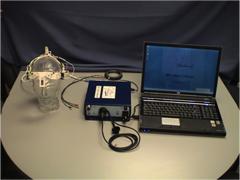
April 1, 2011 – Jan Medical announced that clinical data related to its portable brain imaging system were disclosed at the Society of Interventional Radiology Annual Meeting. The data demonstrated a breakthrough in detecting strokes.
The system is designed for the diagnosis of traumatic brain injury, including concussions.
Diagnosis utilizing the device takes minutes. It emits no energy into the brain and is therefore positioned as a “Non-Significant Risk” in clinical trial protocols. Continuous monitoring options include hours, days or weeks until the condition is resolved or requires intervention. All other brain imaging alternatives, such as CT and MRI, are snapshots.
Kieran J. Murphy, M.D., vice chair and deputy chief of medical imaging and director of medical imaging research at the University of Toronto presented the data.
“Our study validates that the Jan Medical system represents a new paradigm for detecting, diagnosing and monitoring of stroke,” said Murphy. “The small size, portability and rapidity of imaging will allow diagnosis of stroke victims in minutes, which in turn will allow for stroke triage outside of a hospital setting, thus further reducing the time to initial treatment—which should dramatically improve patient outcomes.”
“Stroke is the third-leading cause of death in the U.S. and the leading cause of disability,” added Paul Lovoi, Ph.D., CEO of Jan Medical. “While some 1.5 million patients present annually with what appear to be stroke symptoms, half of them have actually not had a stroke. We believe that our system can have an enormously favorable impact by empowering healthcare providers to make a reliable assessment of stroke in just minutes. Patient outcomes will then be improved because healthcare providers will have the correct and timely information they need to treat their patients faster, at lower cost and less risk.”
The Jan Medical System is an investigational device in the United States.
For more information: www.janmedical.com
 October 19, 2026