March 4, 2010 - Using cryoablation to freeze a cancer kills it in its place, and also appears to generate an immune response that helps stop the cancer's spread, leading to improved survival rates over surgery, according to a new study in mice published in Annals of Surgical Oncology.

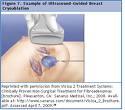
Researchers at the University of Michigan Comprehensive Cancer Center looked at two different cryoablation techniques, which both involve applying a cold probe to a tumor to freeze it. The study was done in mice with breast cancer. One method involves freezing the tumor rapidly, in about 30 seconds; the other freezes the tumor slowly, taking a few minutes. Results from the cryoablation were compared to results from mice whose tumors were removed with surgery.

Both cryoablation techniques successfully killed the breast tumor. The mice treated with the rapid freeze had fewer tumors that spread to the lungs and improved survival compared to mice treated with surgery alone or mice treated with the slower freezing technique. The study showed that the benefit from the rapid freezing is likely due to changes in the immune system that help to kill the tumor. Freezing with the slower technique appeared to make the immune system not as able to kill the tumor.

The study appears online in Annals of Surgical Oncology. Based on these results from mice, researchers are now conducting a clinical trial using cryoablation in patients with breast cancer. In this trial, researchers use the rapid freezing technique.

Source: Annals of Surgical Oncology, DOI 10.1245/s10434-009-0846-1.

For more information: www.annsurgoncol.org


Related Content

News | Radiology Business

The American Society of Radiologic Technologists (ASRT) will host a free Virtual Career Fair on March 17, from 4-7 p.m ...

Time February 20, 2026
arrow
News | Magnetic Resonance Imaging (MRI)

Feb. 19, 2026 — GE HealthCare recently announced 510(k) clearance of three new magnetic resonance (MR) innovations with ...

Time February 20, 2026
arrow
Feature | Artificial Intelligence

For the past decade, artificial intelligence's (AI) potential in healthcare has been synonymous with speed. In medical ...

Time February 16, 2026
arrow
News | ARRS

Feb. 11, 2026 —The American Roentgen Ray Society (ARRS) has announced the following radiologists, as well as their ...

Time February 13, 2026
arrow
News | Radiology Business

Feb. 3, 2026 — RadNet, Inc., a provider of high-quality, cost-effective outpatient diagnostic imaging services and ...

Time February 12, 2026
arrow
News | Magnetic Resonance Imaging (MRI)

Feb. 6, 2026 — A state-of-the-art intraoperative MRI (iMRI) has arrived at the University of Chicago Medicine, one of ...

Time February 06, 2026
arrow
News | Computed Tomography (CT)

Feb. 4, 2026 — A new review published in the American Journal of Roentgenology (AJR) finds that advances in CT ...

Time February 04, 2026
arrow
News | Radiology Imaging

Feb. 4, 2026 — The Royal College of Radiologists (RCR) has issued its initial reaction to the British government's ...

Time February 04, 2026
arrow
News | Radiology Education

Jan. 22, 2026—The American Roentgen Ray Society (ARRS) will host a live virtual symposium, "Medical Imaging for ...

Time January 28, 2026
arrow
News | Computed Tomography (CT)

Jan. 21, 2026 — Aidoc recently announced that the U.S. Food and Drug Administration (FDA) cleared the industry's first ...

Time January 23, 2026
arrow
Subscribe Now