January 19, 2010 – While computed tomography (CT) is a crucial medical imaging tool in diagnosing illness and disease in children, there is always a concern over the amount of radiation dose a pediatric patient receives. Medical institutions, such as St. Louis Children’s Hospital, in St. Louis, is recognized as one of the leading pediatric healthcare centers in the United States and enhancing its nationally renowned pediatric care program by using CT with reduced radiation dose technology.
“In light of recent studies on radiation dose and best practices for dose reduction, it is essential to employ a CT scanner that can not only ensure some dose reduction, but provide one of the fastest scan speeds, while still maintaining optimal imaging performance,” said Marilyn J. Siegel, M.D., division of diagnostic radiology and professor of radiology and pediatrics, St. Louis Children’s Hospital. “This latest addition to our CT family allows Children’s Hospital to better serve our young patients with safe, effective, quality care.”
In the July 2009 issue of Radiology (Deak P., Langner O., Lell M., Kalender W. "Effects of adaptive section collimation on patient radiation dose in multisection spiral CT." Radiology, vol. 252, issue 1, July 2009) a team of researchers evaluated the potential effectiveness of adaptive collimation in reducing CT radiation dose owing to z-overscanning (one of the factors responsible for radiation burden in spiral CT examinations) by using dose measurements and dose simulations.
The data revealed that by using adaptive section collimation, a substantial dose reduction of up to 10 percent was achieved for cardiac and chest CT when measurements were performed free in air and of 7 percent, on average, when measurements were performed in phantoms. For scan ranges smaller than 12 cm, ionization chamber measurements and simulations indicated a dose reduction of up to 38 percent, according to the team’s findings.
The research team concluded that adaptive section collimation allows substantial reduction of unnecessary exposure owing to z-overscanning in spiral CT. It can be combined in synergy with other means of dose reduction, such as spectral optimization and automatic exposure control.
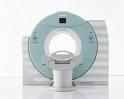
The hospital will install a SOMATOM Definition AS CT systems from Siemens Healthcare, which provides CARE Dose 4D, a real-time dose modulation technology. The software assists in guaranteeing a combination of maximum image quality at minimum dose for every patient in every spiral scan. The entire SOMATOM Definition AS family of scanners comes with adaptive dose shield and set of pediatric protocols to provide optimal patient care.
For more information: www.siemens.com/healthcare

 October 07, 2026