News | December 28, 2009
PET, SPECT Capture Cell Death in 3D

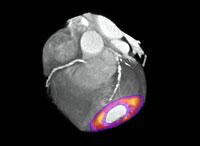
December 28, 2009 - The Medical College of Wisconsin will license a novel molecular imaging technology designed to rapidly diagnosis cell death in organs such as the brain and heart. The technology, using imaging probes with a radiopharmaceutical compound, was invented by Ming Zhao, Ph.D., assistant professor of biophysics. The probes bind to dead and dying cells making them useful for detecting acute cell injury and cell death. When the active component of this molecule is attached to a radioactive tracer, it can be used in nuclear medicine imaging techniques, such as positron emission tomography (PET) or single photon emission computed tomography (SPECT), to produce three-dimensional images of where this cell death is occurring. "Imaging agent discovery and development is an important aspect in molecular and medical imaging research," Zhao said. "The process is critical for the improvement of existing imaging technologies and for early detection of acute cell death, cancerous tissue growth and major vessel diseases." He said the ability to image dead and dying cells can have major clinical benefits. For example, it could allow oncologists to rapidly monitor tumor response to a specific therapy. Another potential application is for rapid diagnosis of myocardial infarction. Often patients come into ER complaining of chest pain and need to have an expensive overnight hospital stay so they can be monitored while their lab results are being processed. This compound could allow clinicians to noninvasively image the heart and determine within a few hours if the patient actually had a heart attack or something else. The university announced today it signed a licensing agreement with GE Healthcare to further evaluate and develop the technology with the option to commercialize it. For more information: www.mcw.edu


Related Content

News | Information Technology

October 6, 2026 – Clearsense has introduced a cloud-based medical image archive designed to reduce the cost of ...

Time October 07, 2026
arrow
News | Radiopharmaceuticals and Tracers

Oct. 5, 2026 — GE HealthCare has announced a definitive agreement to acquire SOFIE Biosciences, a U.S.-based CMO for PET ...

Time October 06, 2026
arrow
News | PET-MRI

Sept. 29, 2026 —Yale New Haven Hospital has installed a state-of-the-art positron emission tomography/magnetic resonance ...

Time October 05, 2026
arrow
News | Radiopharmaceuticals and Tracers

Aug. 30, 2026 — Bayer has announced the presentation of first detailed results from the Phase III REVEAL study, an ...

Time September 02, 2026
arrow
News | Radiation Oncology

July 8, 2026 — GE HealthCare and Mayo Clinic have announced the MI-BET (Molecular Imaging Biomarker-Based End of Therapy ...

Time July 09, 2026
arrow
News | PET-MRI

June 10, 2026 — UTHealth Houston has launched a state-of-the-art PET/MRI imaging service, bringing together two advanced ...

Time June 12, 2026
arrow
News | Nuclear Imaging

June 1, 2026 — At the 2026 Society of Nuclear Medicine and Molecular Imaging (SNMMI) annual meeting, GE HealthCare will ...

Time June 02, 2026
arrow
News | Radiopharmaceuticals and Tracers

June 1, 2026 — Serac Healthcare Ltd. has presented Phase 2 data showing that SPECT-CT imaging with the radiotracer 99mTc ...

Time June 01, 2026
arrow
News | Radiopharmaceuticals and Tracers

May 27, 2026 — Subtle Medical has received FDA clearance for its SubtleHD (PET), the company's next-generation AI ...

Time May 27, 2026
arrow
News | Radiopharmaceuticals and Tracers

May 7, 2026 — Bayer has announced positive topline results from the Phase III REVEAL study, an investigator-initiated ...

Time May 08, 2026
arrow
Subscribe Now