November 2, 2009 — Men who receive a "boost" of proton therapy after receiving a standard course of X-ray radiation therapy have fewer recurrences of their prostate cancer compared to men who did not receive the extra dose of proton radiation, according to a first-of-its-kind study presented Nov. 2, at the American Society for Radiation Oncology’s (ASTRO) 51st Annual Meeting in Chicago. The multi-institutional, randomized trial also shows that the high dose treatment is safe for these patients and causes no severe problems later with urinary or bowel functions.
"There is a lot of interest in proton therapy for prostate cancer. This study proves the importance of giving high radiation doses to prostate cancer patients with low- and intermediate-risk disease because it demonstrates that even these "favorable" patients still benefit from the extra high-dose treatment," said Carl J. Rossi Jr., M.D., a study author and a radiation oncologist at the Loma Linda University Medical Center in Loma Linda, Calif. "It also shows that so long as these higher doses are given with a highly conformal technique, such as proton beam therapy, then they can be delivered safely and with minimal side effects."
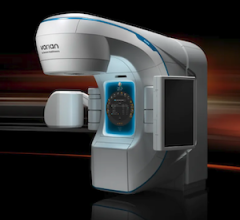
Proton beam therapy is a form of external beam radiation treatment that uses protons rather than photon X-rays to treat certain types of cancer and other diseases. The physical characteristics of the proton therapy beam allow the radiation oncologist to more effectively reduce the radiation dose to nearby healthy tissue.
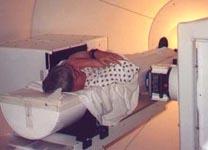
During external beam radiation therapy, a beam of radiation is directed through the skin to the cancer and the immediate surrounding area in order to destroy the main tumor and any nearby cancer cells.
The study involved 391 patients with early prostate cancer (cancer that has not spread out of the prostate) receiving proton treatments at Loma Linda University Medical Center and Massachusetts General Hospital in Boston. Patients were randomized to receive either "standard dose" or "high dose" radiation, with proton beams being used to deliver the high-dose radiotherapy to prostate.
Findings show that in patients with a low risk of recurrence, only 6 percent of patients who were treated with high dose radiation had the cancer return after 10 years, compared to 29 percent who had conventional radiation doses. Similarly, of the patients with an intermediate risk of cancer recurrence, 37 percent who underwent high dose radiation had cancer come back, versus 45 percent of those who had conventional doses of radiation. There were no significant differences between the two groups in how long they survived and in their urinary and bowel functions.
For more information: www.rtanswers.org
 October 07, 2026