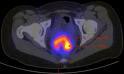
February 5, 2009 - UCLA scientists are using positron emission tomography (PET) to evaluate tumor response to chemotherapy before prescribing therapy, enabling physicians to quickly pinpoint the most effective treatment and personalize it to the patient's unique biochemistry. The Proceedings of the National Academy of Sciences published the UCLA findings in its Feb. 2 online edition.
"For the first time, we can watch a chemotherapy drug working inside the living body in real time," explained Caius Radu, M.D., a researcher at the Crump Institute for Molecular Imaging and assistant professor of molecular and medical pharmacology at the David Geffen School of Medicine at UCLA. "We plan to test this method in healthy volunteers within the year to determine whether we can replicate our current results in humans."
In an earlier study, Radu and his colleagues created a small probe by slightly altering the molecular structure of gemcitabine, one of the most commonly used chemotherapy drugs. They labeled the probe with a special tag that enabled them to watch its movement throughout the body during imaging.
In this study, the UCLA team injected the probe into mice that had developed leukemia and lymphoma tumors. After an hour, the researchers imaged the animals' bodies with PET.
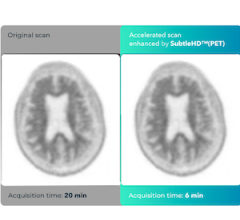
"Because we tag the probe with positron-emitting particles, the cells that absorb it glow brighter under the PET scan,” said Radu, who is also a member of the Jonsson Comprehensive Cancer Center at UCLA.
"The PET scan offers a preview for how the tumor will react to a specific therapy," added first author Rachel Laing, a UCLA graduate researcher in molecular and medical pharmacology. "We believe that the tumor cells that absorb the probe will also take up the drug. If the cells do not absorb the probe, it suggests that the tumor might respond better to another medication."
The UCLA researchers plan to expand the scope of their research by examining whether the probe can predict cellular response to several other widely used chemotherapy drugs. Their goal is to determine whether the probe can provide a diagnostic test of clinical value.
"The beauty of this approach is that it is completely non-invasive and without side effects," said Radu. "If we are successful in transporting this test to a clinical setting, patients will be able to go home immediately and resume their daily activities."
If testing in healthy subjects proves safe and effective, UCLA researchers will begin recruiting volunteers for a larger clinical study of the probe in cancer patients.
For more information: http://www.newsroom.ucla.edu/portal/ucla

 October 16, 2026