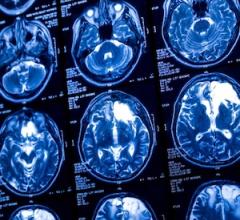
August 27, 2007 - According to a study published in the August issue of Radiology, by using magnetic resonance (MR) images of the brain, researchers have identified a new abnormality related to disease progression and disability in patients with multiple sclerosis (MS).
“Based on these findings, physicians may be able to diagnose multiple sclerosis more accurately and identify patients at risk for developing progressive disease,” said the study’s lead author, Rohit Bakshi, M.D., associate professor of neurology and radiology at Harvard Medical School and director of clinical MS-MRI at Brigham and Women’s Hospital and Partners MS Center in Boston.
Dr. Bakshi and colleagues retrospectively reviewed the T1 MRI data of 145 MS patients, including 112 women and 33 men. Ninety-two patients had relapsing-remitting MS and 49 patients had secondary-progressive MS. The disease classification was unknown in four patients.
The researchers found that T1-weighted MR images of the brains of MS patients often depict bright areas called hyperintense lesions, also known as areas of “T1 shortening,” and set out to determine if there was a relationship between the frequency and location of these lesions and disease progression, brain atrophy and disability in patients with MS.
The analysis uncovered 340 T1 hyperintense lesions in 123 patients. Lesions were more likely to be present in patients with secondary-progressive MS. In addition, 71 percent of patients with secondary-progressive MS had multiple T1 hyperintense lesions, compared with 46 percent of relapsing-remitting MS patients. The total number of T1 hyperintense lesions was closely correlated with physical disability, disease progression and brain atrophy.
“The findings suggest that T1 hyperintense lesions commonly occur in patients with MS and that the presence of multiple lesions indicates a risk for an advancing disease course,” Dr. Bakshi said. “These results further emphasize the importance of MR neuroimaging in the diagnosis and management of neurologic disorders such as MS.”
For more information: www.rsna.org/radiologyjnl

 October 07, 2026